La bebedora de absentaThe Absinthe Drinker
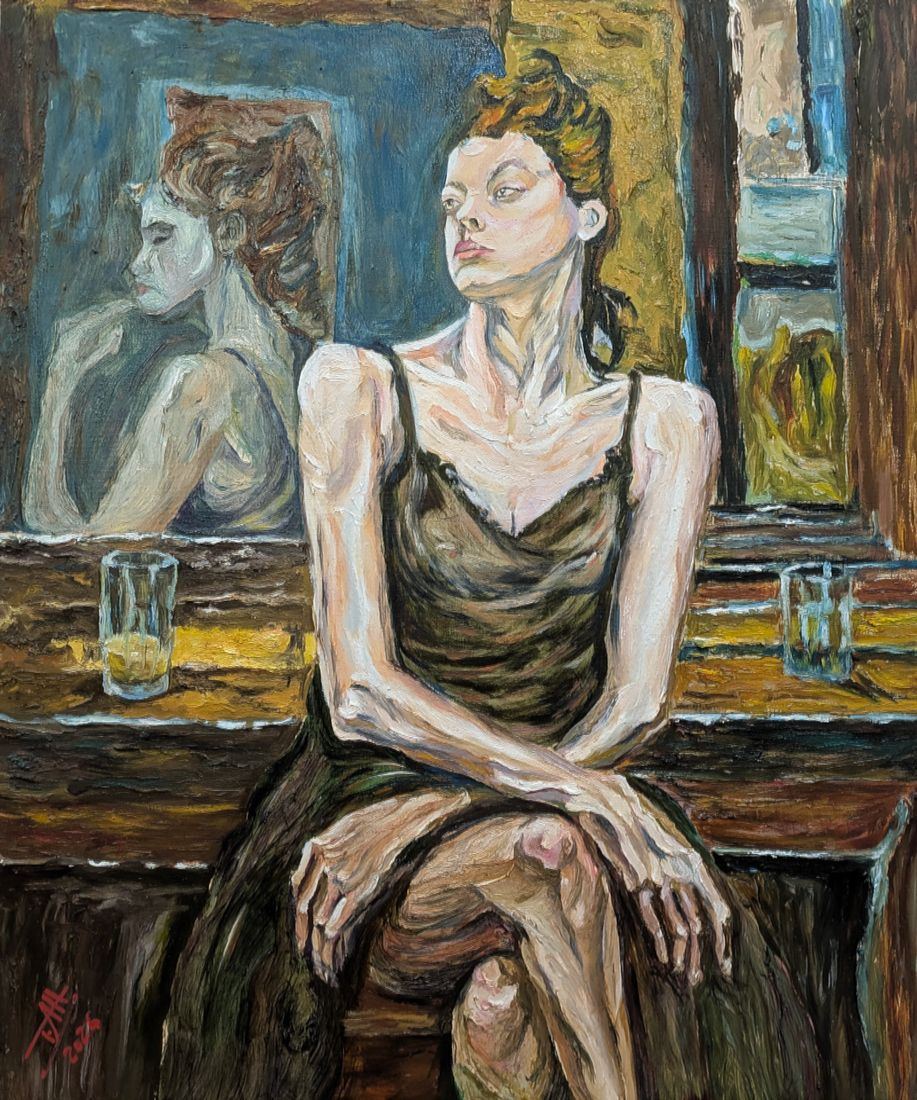
Una mujer sola en la barra y su reflejo: del carboncillo al óleo terminado.A woman alone at the bar and her reflection: from charcoal to finished oil.
Cómo se hizoHow it was made
El cuadro empieza con un estudio a carboncillo en enero de 2026 y se pinta sobre todo en abril. A finales de mes se retoma para la última capa, y el 2 de mayo se da por terminado. Las fotos del taller muestran cómo la figura y su reflejo crecen a la vez.
The painting starts with a charcoal study in January 2026 and is painted mostly in April. At the end of the month it is taken up again for the final layer, and on 2 May it is declared finished. The studio photographs show the figure and her reflection growing together.
-
Estudio a carboncilloCharcoal study
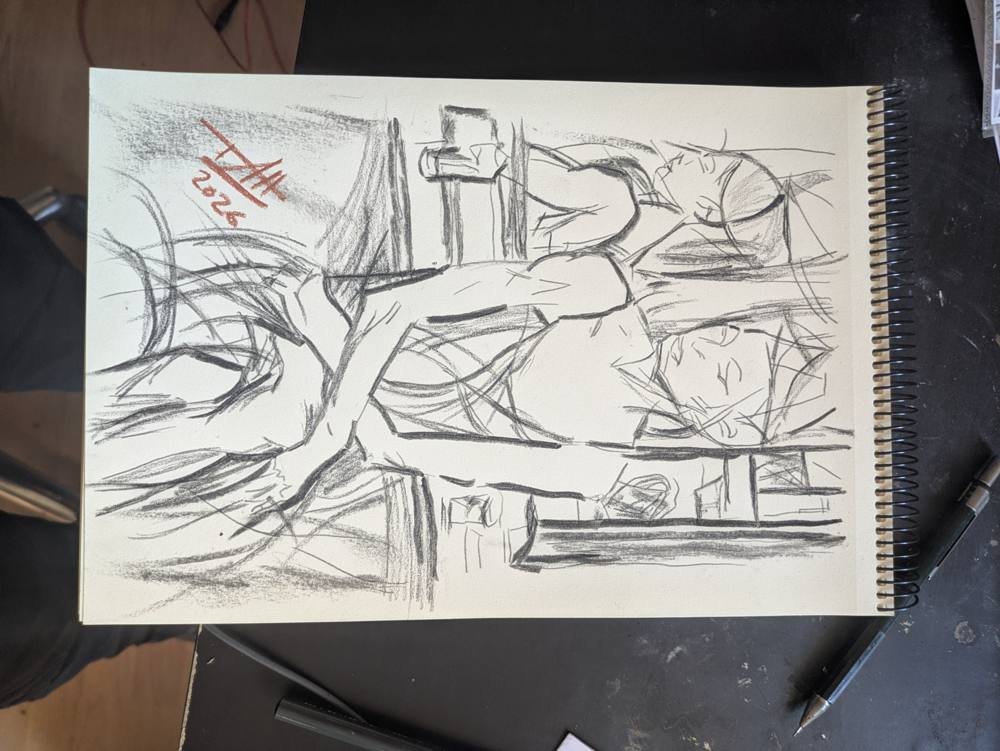
Un dibujo rápido en el cuaderno fija la composición: la figura sentada, la barra y el espejo detrás. Las líneas son ya diagonales y quebradas.
A quick sketchbook drawing fixes the composition: the seated figure, the bar and the mirror behind. The lines are already diagonal and broken.
20-01-2026 -
Dibujo sobre el lienzoDrawing on the canvas
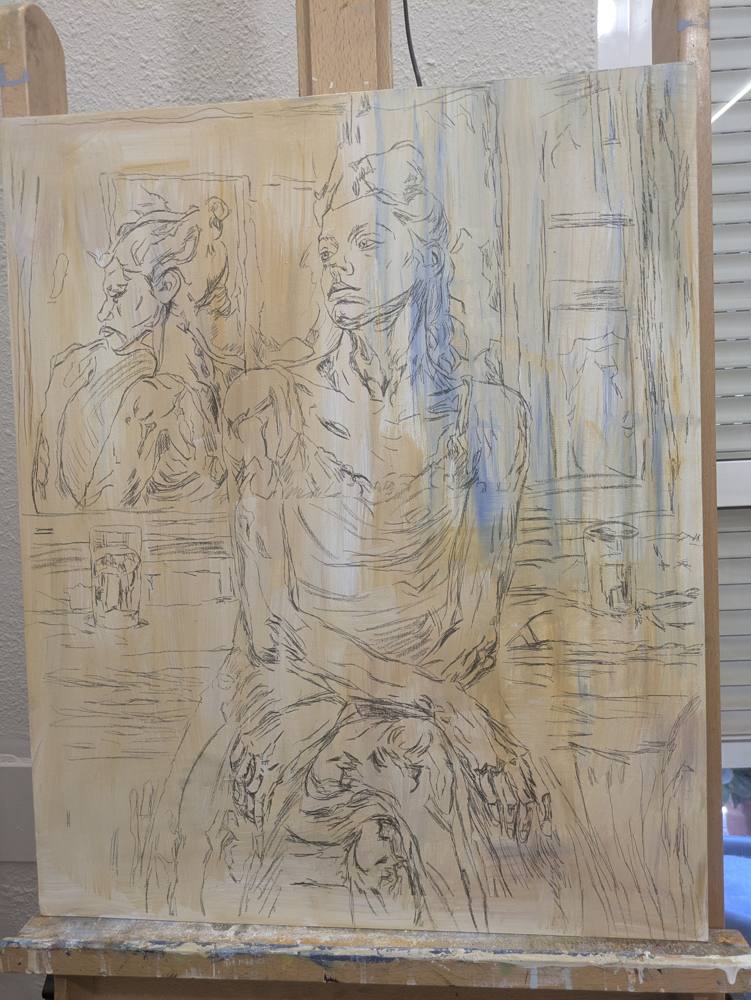
La composición se pasa al lienzo con pincel fino sobre una base clara. La mujer y su reflejo aparecen como dos figuras casi iguales.
The composition is transferred to the canvas with a fine brush over a pale ground. The woman and her reflection appear as two almost identical figures.
05-04-2026 -
Primeras masasFirst masses
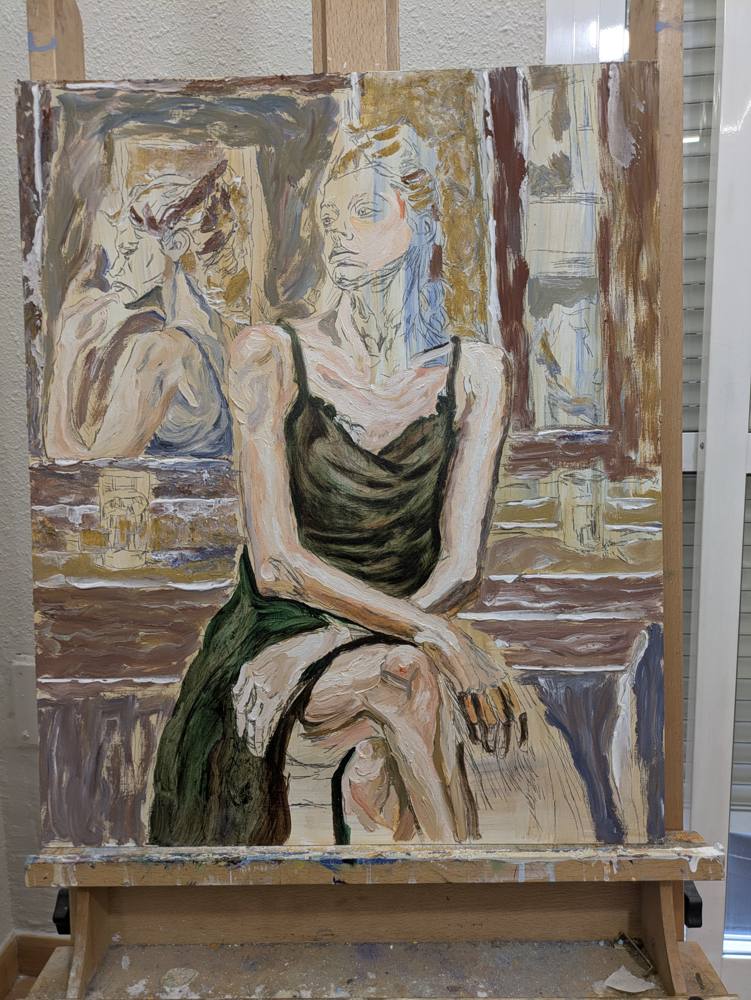
Se cubre el fondo con azules y ocres y el vestido oscuro toma cuerpo. La piel queda todavía en tonos claros, casi sin modelar.
The background is covered with blues and ochres and the dark dress takes shape. The skin is still pale, barely modelled.
07-04-2026 -
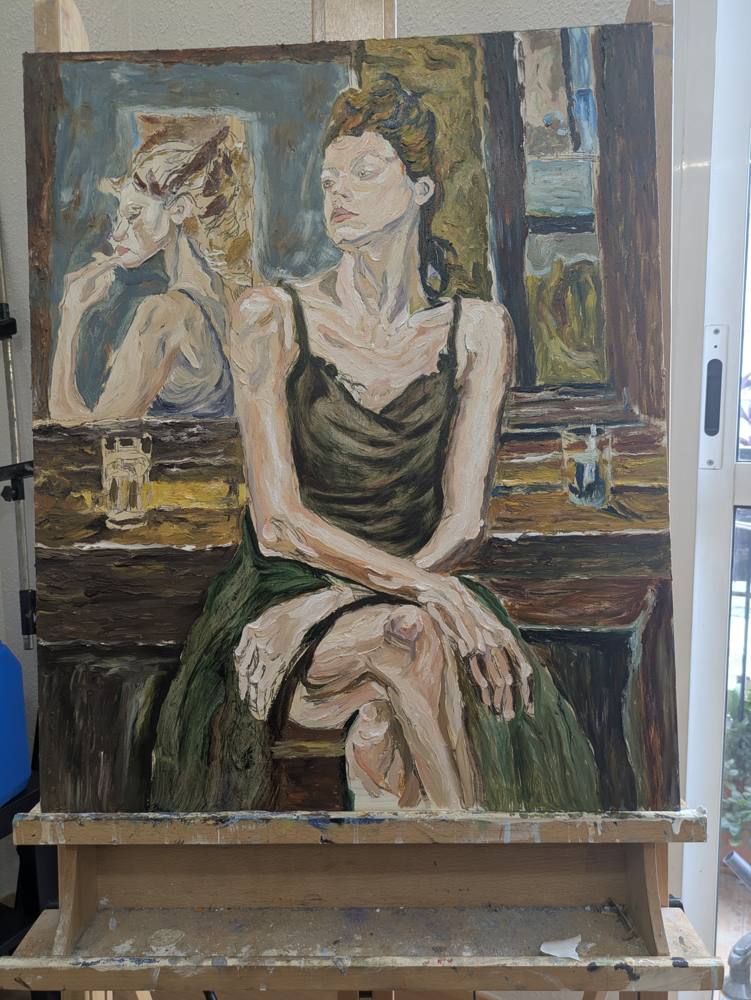
Carne y espejoFlesh and mirror
Se modela la piel con pinceladas visibles de rosa, verde y gris. El reflejo se separa de la figura: más frío, más borroso.
The skin is modelled with visible strokes of pink, green and grey. The reflection separates from the figure: cooler, more blurred.
11-04-2026 -
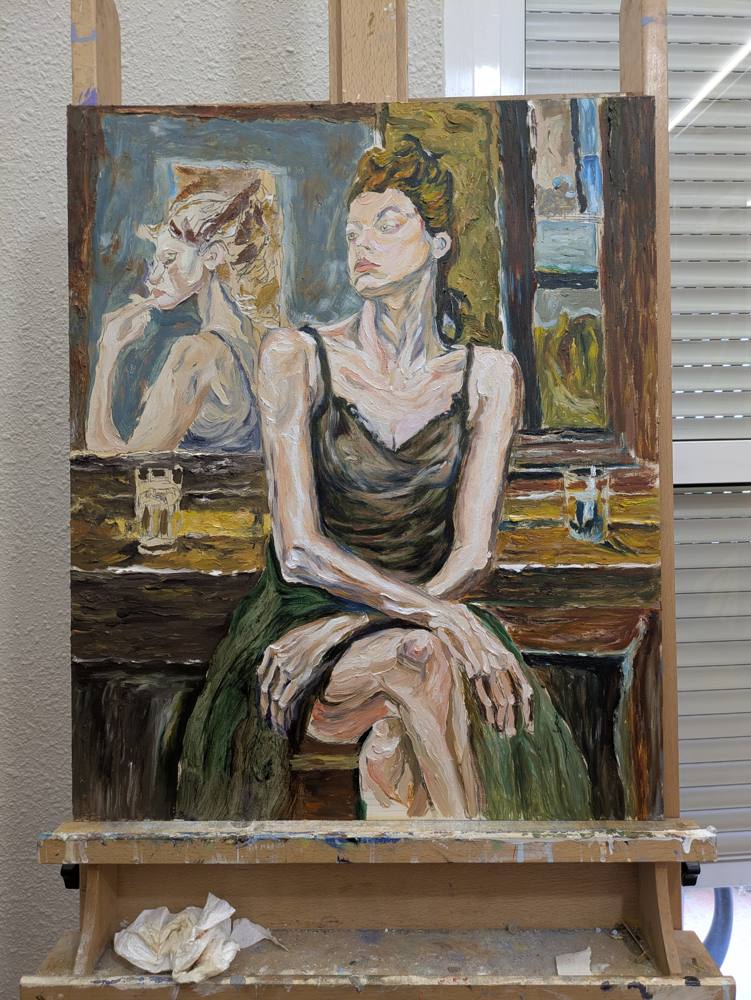
La última capaThe last layer
El cuadro se retoma tras unos días de reposo. Se intensifica el amarillo del fondo y se ajustan las sombras del rostro.
The painting is taken up again after a few days’ rest. The yellow of the background is intensified and the shadows of the face are adjusted.
30-04-2026 -
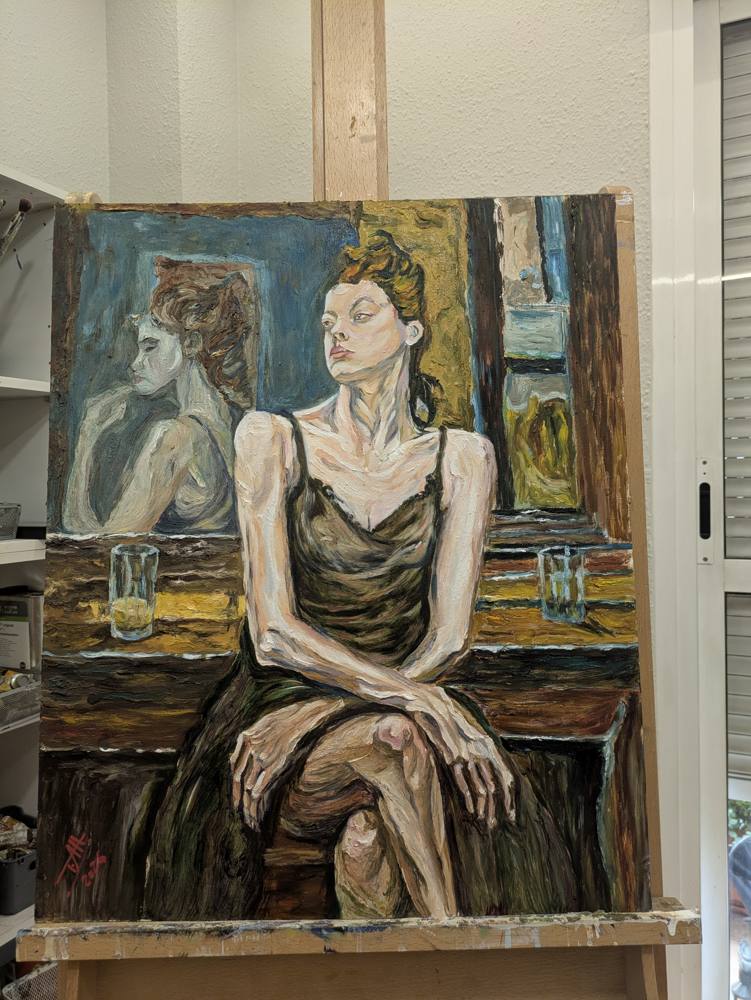
TerminadoFinished
Con los vasos y los últimos brillos de la barra, el cuadro queda acabado.
With the glasses and the last highlights on the bar, the painting is finished.
02-05-2026
La absenta y el caféAbsinthe and the café
La absenta, el «hada verde», fue la bebida de los cafés de París a finales del siglo XIX, y su consumo se asoció a la bohemia y a la soledad del artista. La pintura la convirtió en tema: Manet, Degas y el joven Picasso pintaron bebedores y bebedoras de absenta sentados a solas.
Este cuadro retoma esa tradición desde hoy. La mujer no mira al espectador ni a su vaso: mira hacia fuera del cuadro, ensimismada. El espejo detrás de ella devuelve una segunda versión de sí misma, más fría y difusa, como un eco psicológico.
Absinthe, the ‘green fairy’, was the drink of Paris cafés in the late nineteenth century, and it became associated with bohemia and the solitude of the artist. Painting made it a subject: Manet, Degas and the young Picasso painted absinthe drinkers sitting alone.
This painting takes up that tradition from today. The woman looks neither at the viewer nor at her glass: she looks out of the frame, absorbed. The mirror behind her returns a second version of herself, cooler and more diffuse, like a psychological echo.
- El reflejoThe reflection
Dos figuras para una sola persona: la que está y la que se ve.
Two figures for one person: the one who is there and the one who is seen.
- La soledadSolitude
La barra vacía y los dos vasos subrayan la espera.
The empty bar and the two glasses underline the waiting.
- La tradiciónTradition
Un diálogo con los bebedores de absenta de Manet, Degas y Picasso.
A dialogue with the absinthe drinkers of Manet, Degas and Picasso.
Cómo está pintadoHow it is painted
ComposiciónComposition
La figura ocupa el centro en vertical; el espejo, a la izquierda, la duplica. La barra horizontal corta el cuadro y lo ancla.
The figure occupies the centre vertically; the mirror, on the left, doubles her. The horizontal bar cuts across the painting and anchors it.
ColorColour
Azul profundo en el espejo y amarillos sucios en el fondo, con el verde oscuro del vestido. La piel recoge reflejos de todos ellos.
Deep blue in the mirror and dirty yellows in the background, with the dark green of the dress. The skin picks up reflections from all of them.
PinceladaBrushwork
Óleo con la pincelada a la vista, sobre todo en brazos y rostro, donde cada plano de color construye el volumen.
Oil with visible brushwork, above all on the arms and face, where each plane of colour builds the volume.
Recorrido por los detallesA tour of the details
Pulsa un número para ir al detalle. Pulsa cualquier imagen para verla grande.Tap a number to jump to the detail. Tap any image to see it large.
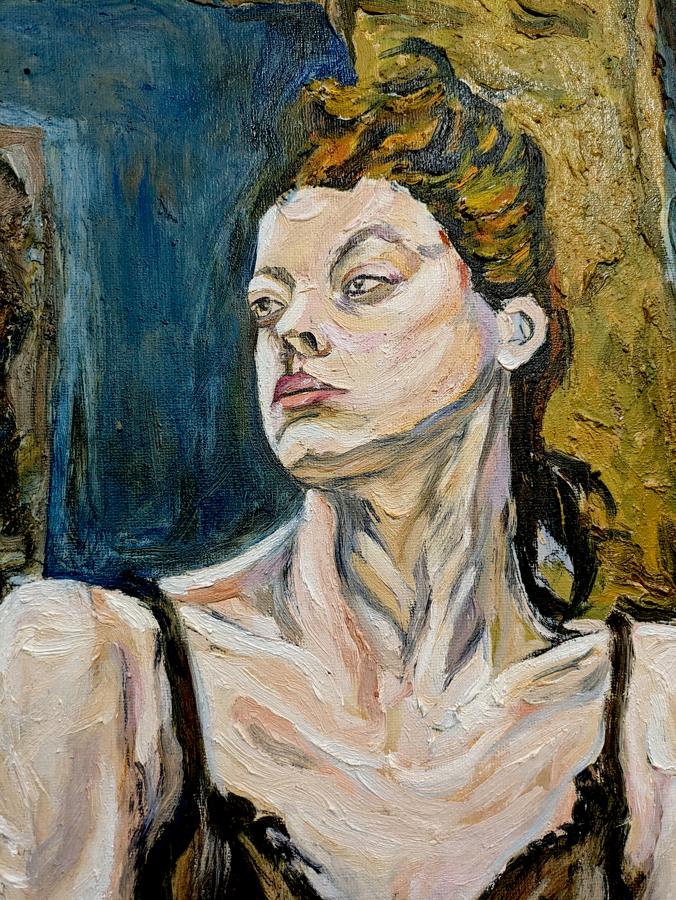
El rostroThe face
La mirada perdida y los párpados pesados. La piel se construye con verdes, rosas y grises, sin fundir.
The absent gaze and heavy eyelids. The skin is built with greens, pinks and greys, left unblended.
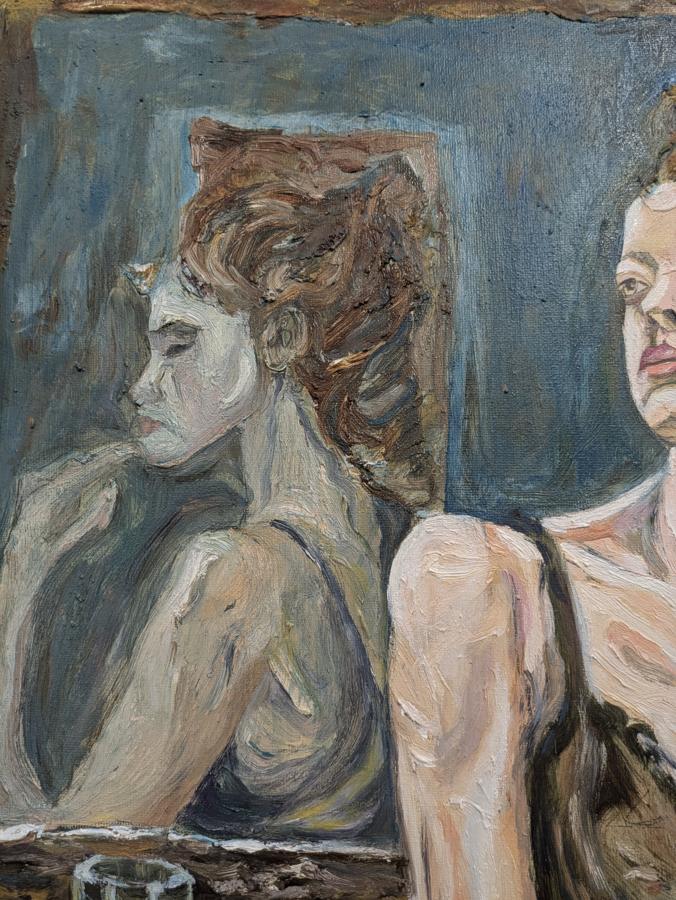
El reflejoThe reflection
El doble del espejo es más azul y más borroso: la misma mujer, a distancia de sí misma.
The double in the mirror is bluer and more blurred: the same woman, at a distance from herself.
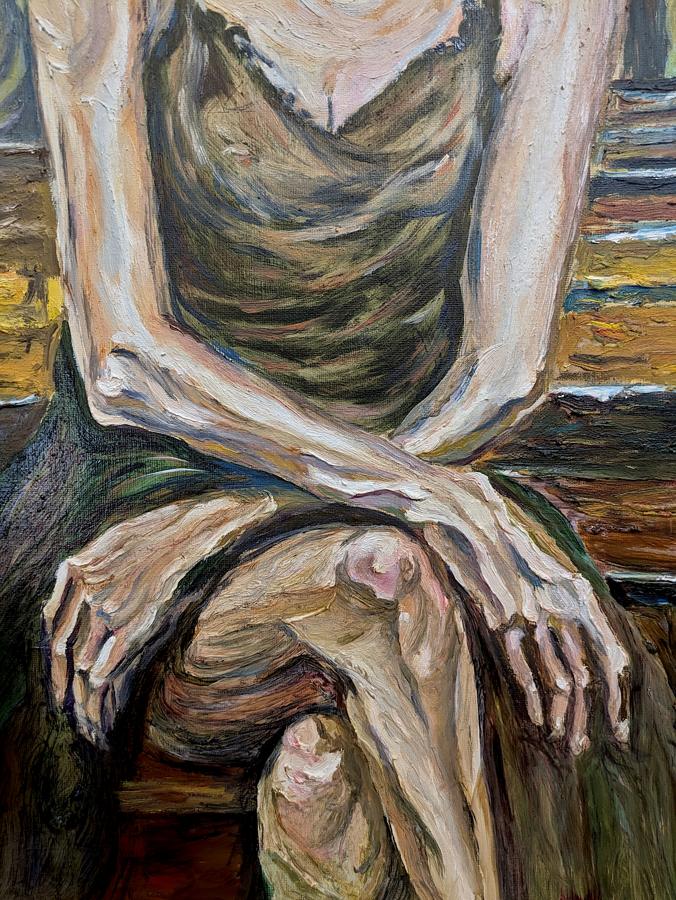
Las manosThe hands
Brazos cruzados sobre la pierna, en un gesto cerrado. Las manos largas están dibujadas con pocas pinceladas.
Arms crossed over the leg in a closed gesture. The long hands are drawn with few strokes.
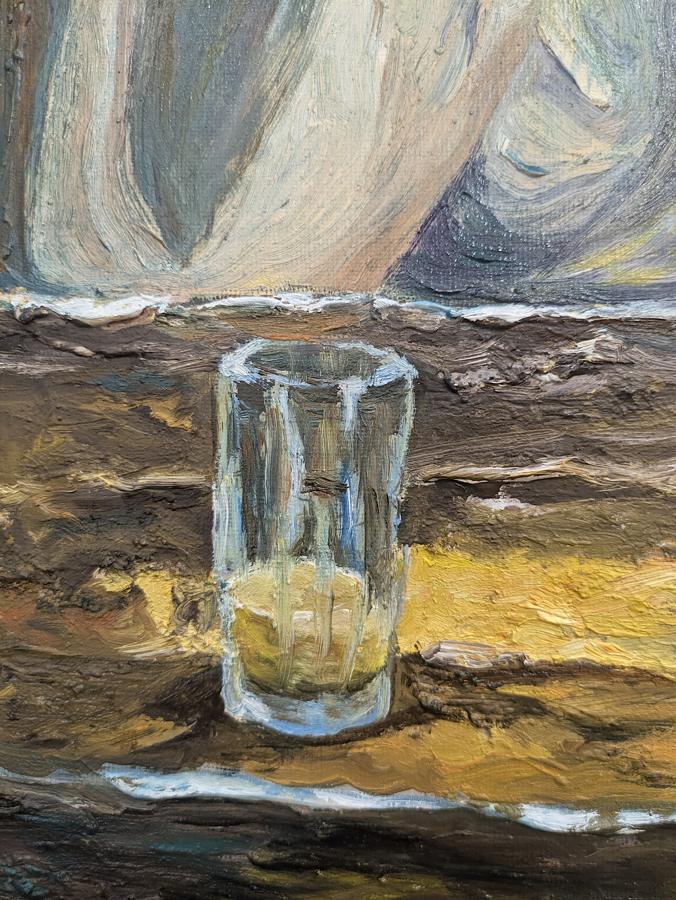
El vasoThe glass
El vaso de absenta, casi transparente, recoge la luz amarilla de la barra.
The glass of absinthe, almost transparent, catches the yellow light of the bar.
El proceso, en vídeoThe process, on video
Un recorrido breve por las fotos del taller, de la primera capa al cuadro terminado.
A short tour through the studio photographs, from the first layer to the finished painting.