All Tomorrow’s PartiesAll Tomorrow’s Parties
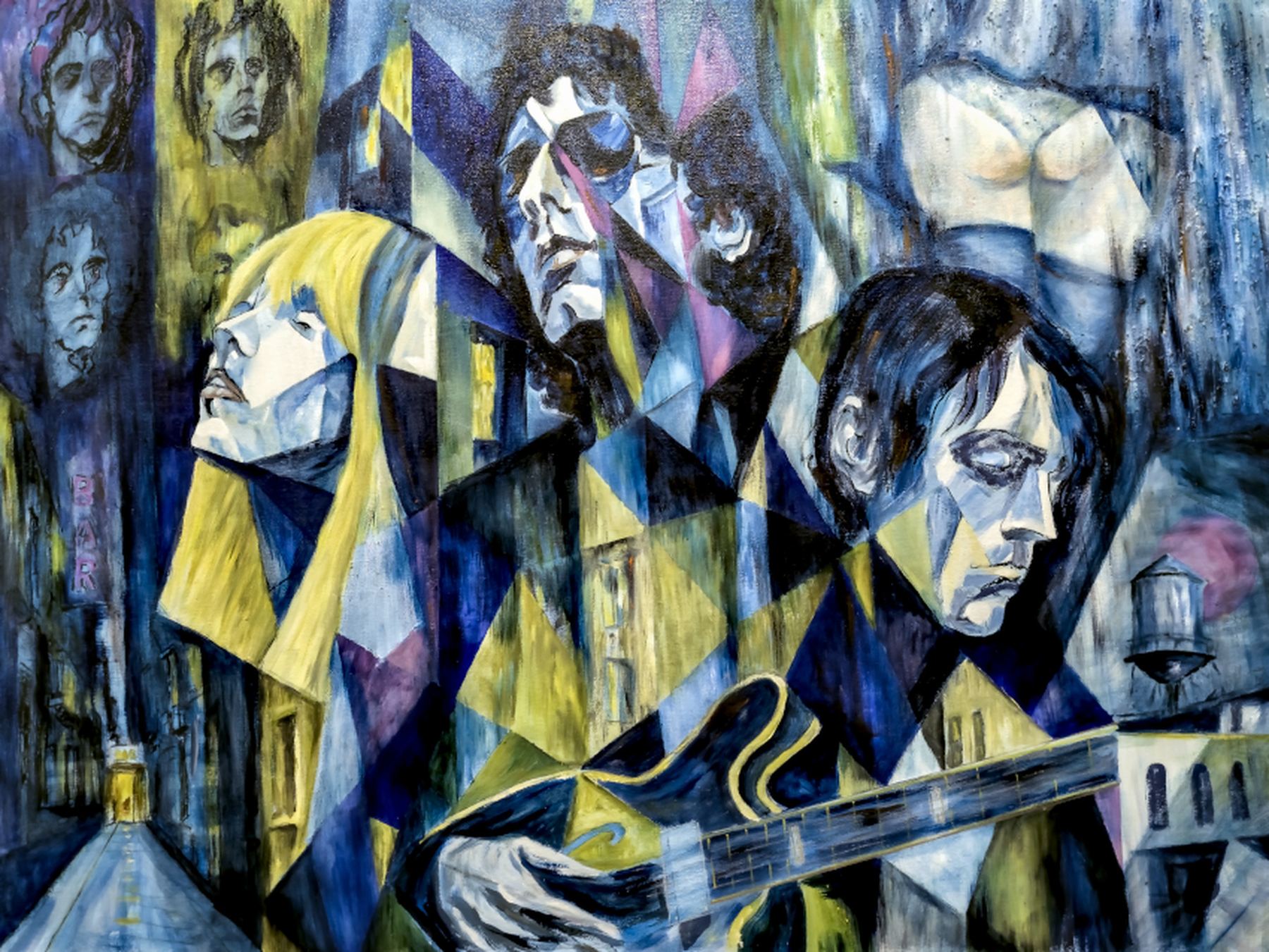
Nico, la Velvet y la noche de Nueva York, rotas en planos azules y amarillos.Nico, the Velvet and New York nights, broken into blue and yellow planes.
Cómo se hizoHow it was made
El cuadro se pintó a finales de agosto de 2026. Las fotos del taller muestran cómo pasa en pocos días del dibujo sobre una aguada azul a una red de triángulos de color que encierra a las figuras, con la calle y la ciudad asomando por los bordes.
The painting was made at the end of August 2026. The studio photographs show how, in a few days, it moves from a drawing over a blue wash to a web of coloured triangles that encloses the figures, with the street and the city peering in at the edges.
-
El dibujoThe drawing
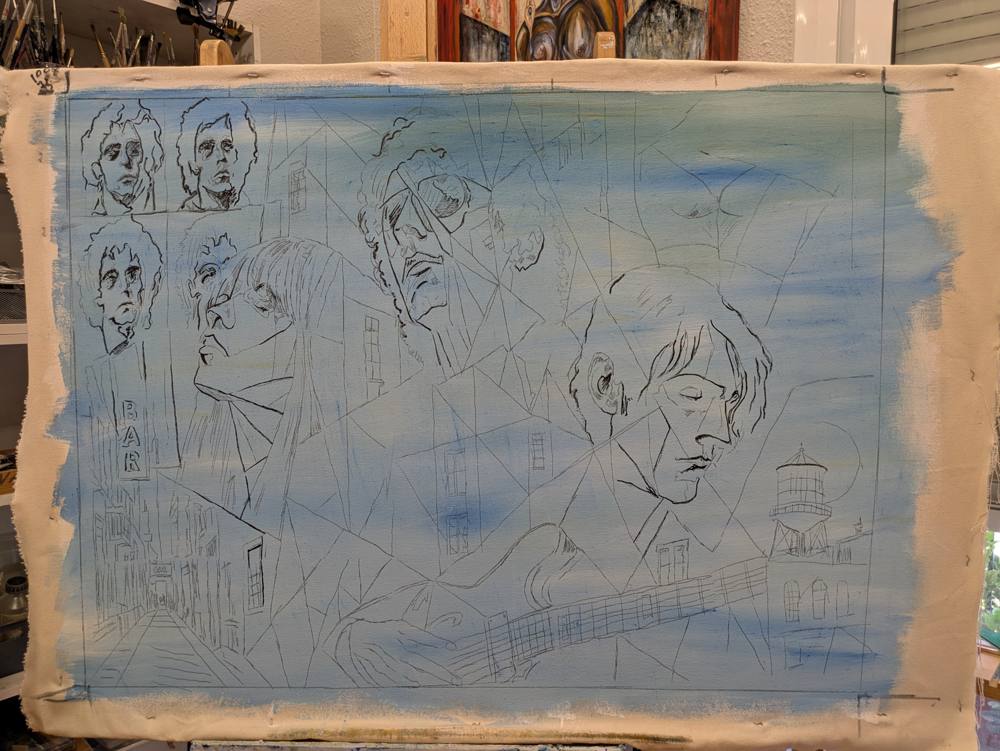
Sobre una base de azul claro se dibujan a lápiz los rostros: la cantante con la cabeza alzada, los músicos y una columna de retratos pequeños a la izquierda. Ya se adivina la guitarra en la parte baja.
Over a pale blue ground the faces are drawn in pencil: the singer with her head raised, the musicians and a column of small portraits on the left. The guitar can already be made out at the bottom.
22-08-2026 -
Los primeros triángulosThe first triangles
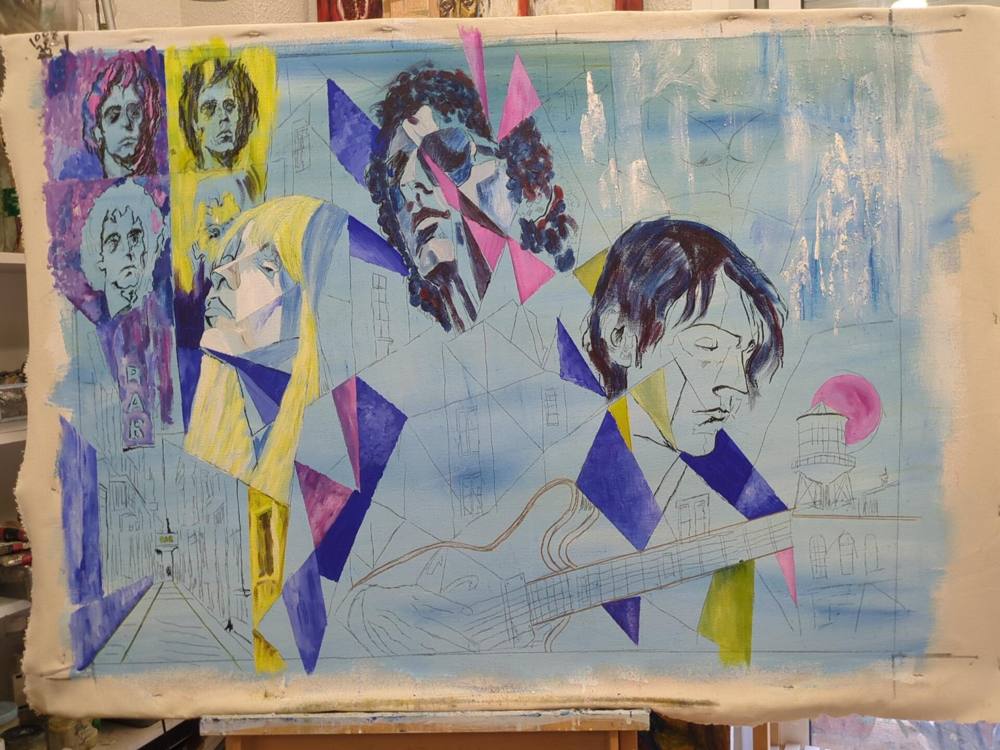
Entran el amarillo, el violeta y el rosa en forma de triángulos que cortan el espacio. Los retratos de la izquierda reciben fondos de color, como serigrafías. La luna rosa aparece a la derecha.
Yellow, violet and pink come in as triangles that cut through the space. The portraits on the left get coloured backgrounds, like screen prints. The pink moon appears on the right.
24-08-2026 -
La noche se cierraNight closes in
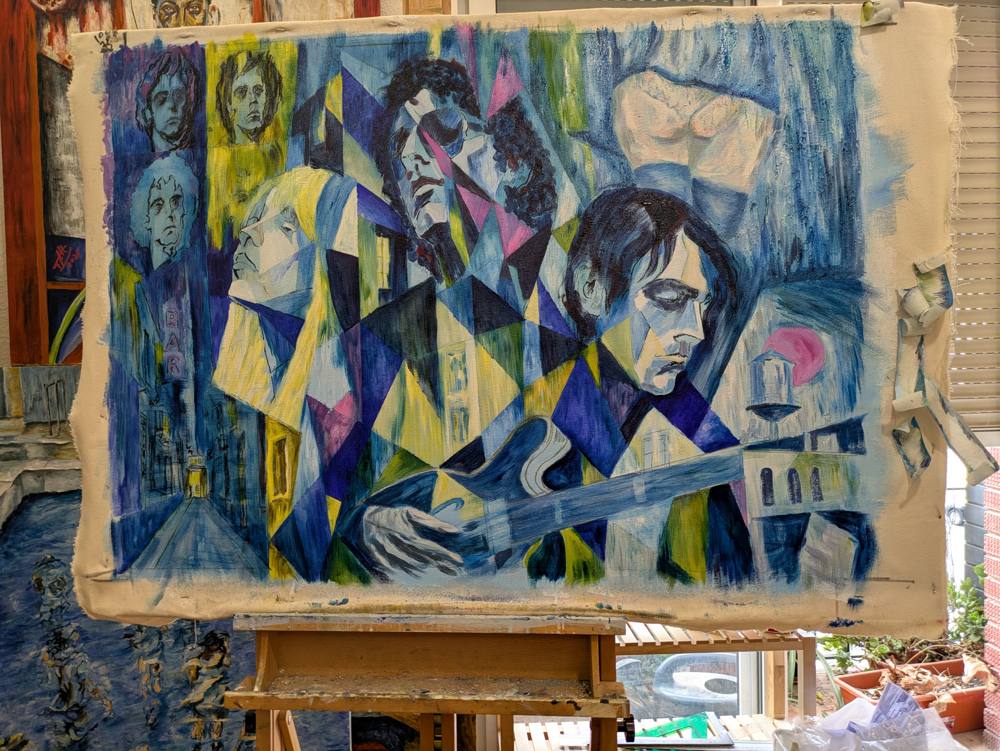
El azul oscuro cubre casi todo el lienzo y las figuras se modelan con planos de luz. Abajo a la izquierda se abre una calle con el letrero de un bar; a la derecha, los edificios y un depósito de agua.
Dark blue covers almost the whole canvas and the figures are modelled with planes of light. At lower left a street opens up with a bar sign; on the right, buildings and a water tower.
27-08-2026 -
Últimos toquesFinal touches
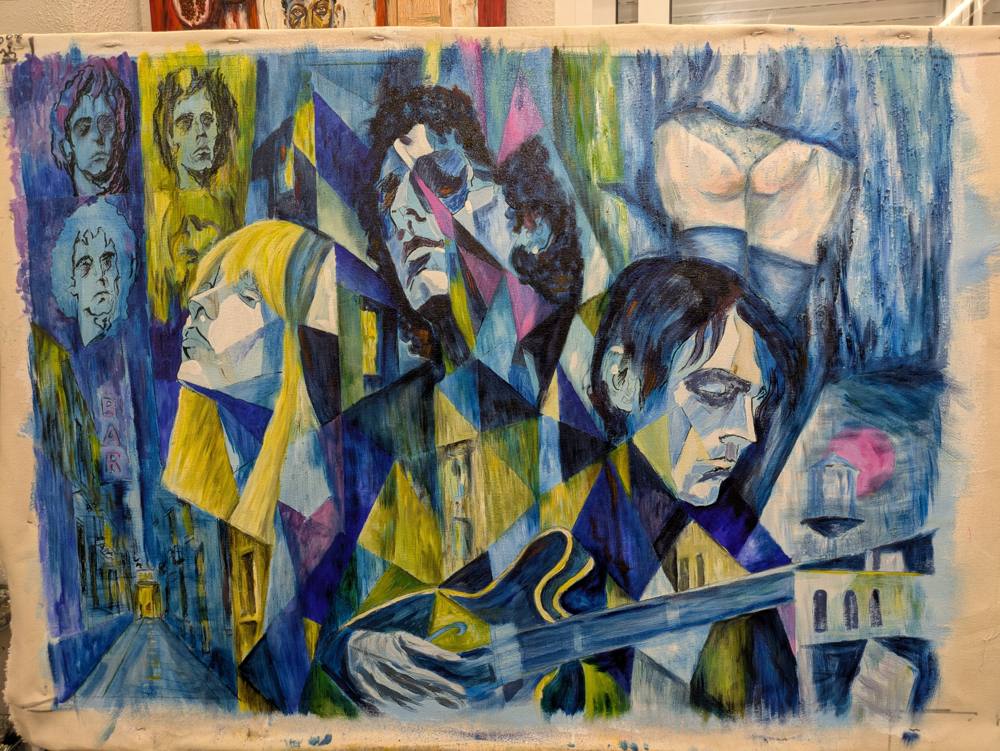
Se termina la guitarra, se aclaran los rostros y aparece arriba a la derecha un desnudo de espaldas. El cuadro queda listo: una sola superficie de fragmentos donde música, gente y ciudad se mezclan.
The guitar is finished, the faces are brightened and a nude seen from behind appears at upper right. The painting is ready: a single surface of fragments in which music, people and city blend together.
28-08-2026
La fiesta y lo que queda despuésThe party and what remains after
“All Tomorrow’s Parties” es una canción de The Velvet Underground & Nico, el disco de 1967 producido por Andy Warhol. La canta Nico con su voz grave, y habla de una chica que se prepara para la fiesta de mañana sabiendo que, al final, todo vuelve a ser gris.
El cuadro reúne ese mundo: la cantante rubia que mira hacia arriba, los músicos con gafas oscuras, la guitarra, los retratos repetidos como en una serigrafía de la Factory, la calle con el letrero de un bar y los tejados de Nueva York. No es una escena real, sino un recuerdo hecho de pedazos, como la noche misma.
“All Tomorrow’s Parties” is a song from The Velvet Underground & Nico, the 1967 album produced by Andy Warhol. Nico sings it in her deep voice, and it tells of a girl getting ready for tomorrow’s party knowing that, in the end, everything turns grey again.
The painting gathers that world: the blonde singer looking upwards, the musicians in dark glasses, the guitar, the portraits repeated as in a Factory screen print, the street with a bar sign and the rooftops of New York. It is not a real scene but a memory made of pieces, like the night itself.
- MúsicaMusic
La canción da el tono: lenta, nocturna, con una melancolía que no se va ni en plena fiesta.
The song sets the tone: slow, nocturnal, with a melancholy that stays even at the height of the party.
- RepeticiónRepetition
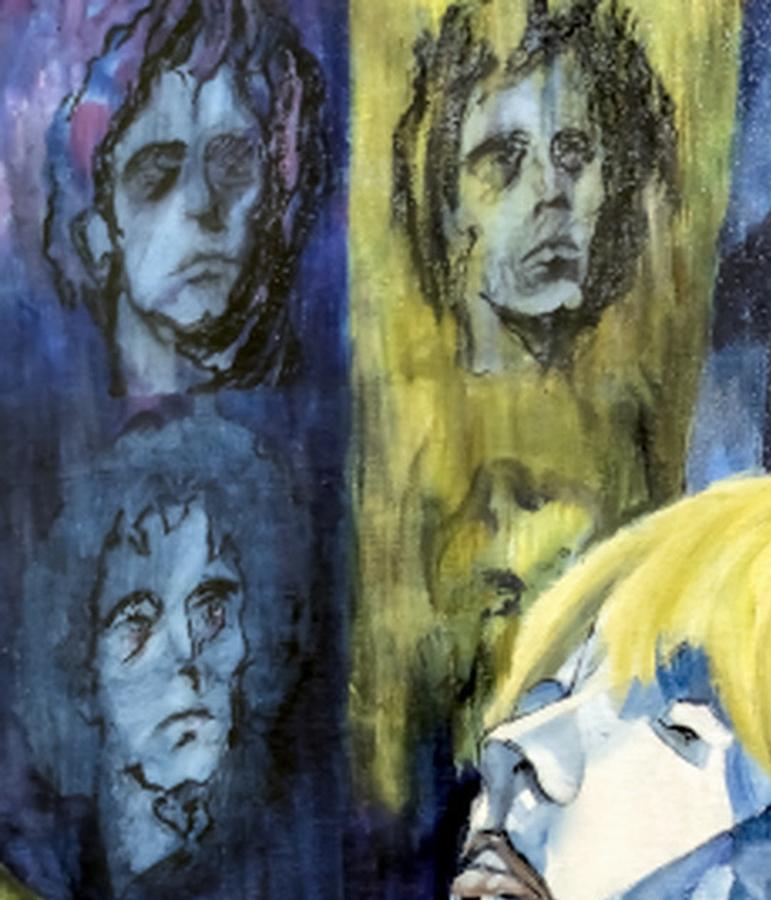
Los retratos de la columna izquierda recuerdan las serigrafías de Warhol: la misma cara, distintos colores.
The portraits in the left column recall Warhol’s screen prints: the same face, different colours.
- CiudadCity
La calle, el bar y el depósito de agua sitúan la escena en Nueva York sin necesidad de contarlo.
The street, the bar and the water tower place the scene in New York without having to say so.
Cómo está pintadoHow it is painted
ComposiciónComposition
Tres cabezas forman una diagonal que sube de izquierda a derecha, y la guitarra la cruza por abajo. Los bordes quedan para la ciudad: la calle a la izquierda, los edificios a la derecha.
Three heads form a diagonal rising from left to right, and the guitar crosses it below. The edges are left to the city: the street on the left, the buildings on the right.
ColorColour
Azul de noche en todas sus gamas, con amarillos ácidos y algún violeta o rosa como luz de neón. Los blancos se reservan para los rostros.
Night blue in all its shades, with acid yellows and the odd violet or pink like neon light. Whites are kept for the faces.
MateriaMatter
Técnica mixta: aguadas finas en el fondo, que dejan ver el lienzo, y capas más densas en los rostros y la guitarra.
Mixed media: thin washes in the background that let the canvas show through, and denser layers on the faces and the guitar.
Recorrido por los detallesA tour of the details
Pulsa un número para ir al detalle. Pulsa cualquier imagen para verla grande.Tap a number to jump to the detail. Tap any image to see it large.
Los retratos repetidosThe repeated portraits
Caras pequeñas sobre fondos amarillos y azules, como una tira de serigrafías. Son el eco de la Factory dentro del cuadro.
Small faces on yellow and blue grounds, like a strip of screen prints. They are the echo of the Factory inside the picture.
La cantanteThe singer
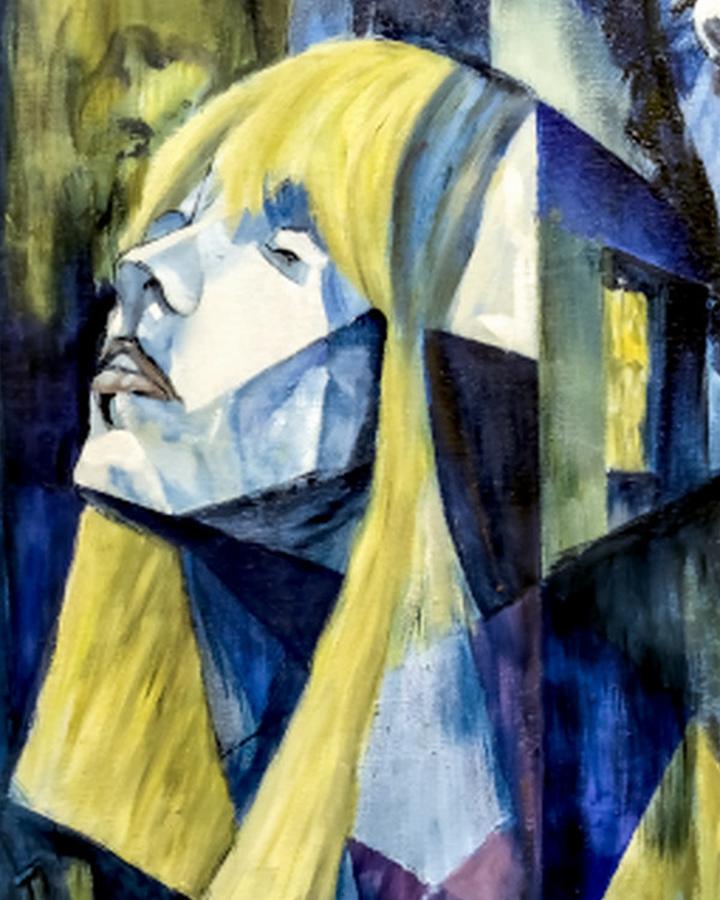
La cabeza echada hacia atrás y los ojos cerrados. El pelo amarillo se convierte en triángulos que bajan hasta el borde.
Head thrown back and eyes closed. The yellow hair turns into triangles that run down to the edge.
Las gafas oscurasThe dark glasses
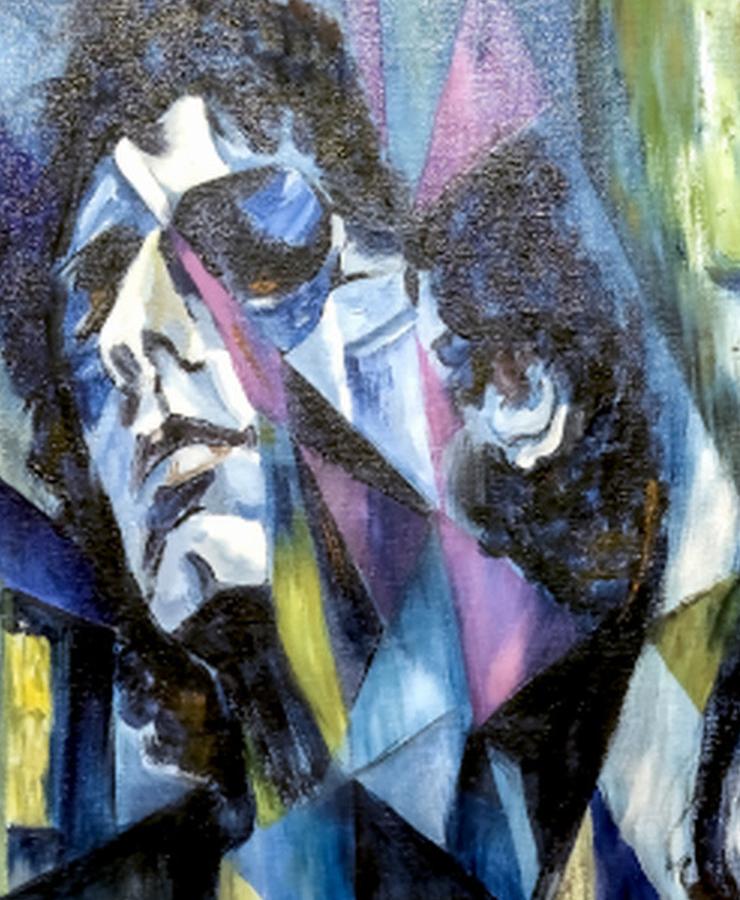
El rostro central se esconde tras unas gafas de sol. Los planos violeta y azul le dan un aire de cristal roto.
The central face hides behind sunglasses. Violet and blue planes give it the look of broken glass.
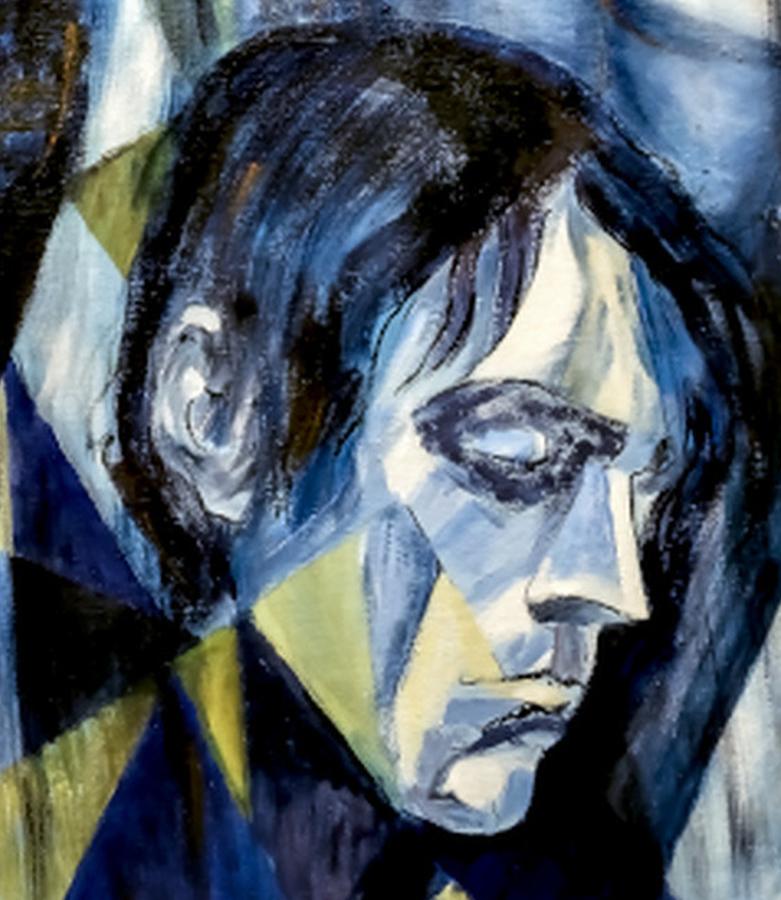
El guitarristaThe guitarist
Con la mirada baja y el pelo largo, es la figura más quieta del cuadro: toca hacia dentro.
Eyes lowered and hair long, he is the stillest figure in the picture: he plays inwards.
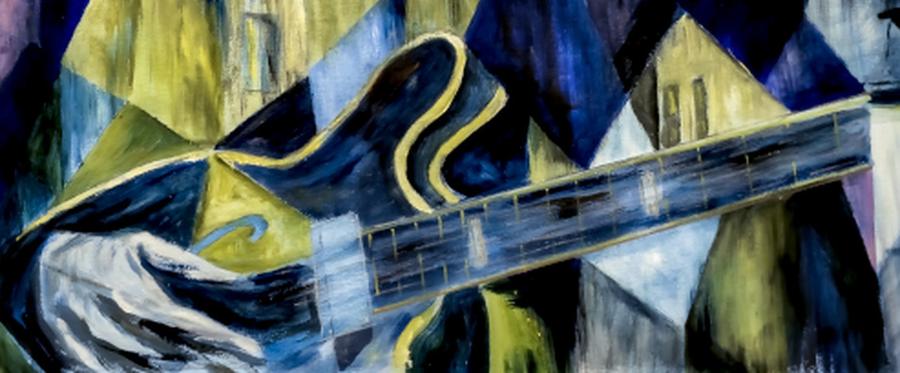
La guitarraThe guitar
Una guitarra de caja, negra y amarilla, atraviesa la parte baja. Su mástil hace de horizonte.
A black and yellow hollow-body guitar crosses the lower part. Its neck acts as a horizon.
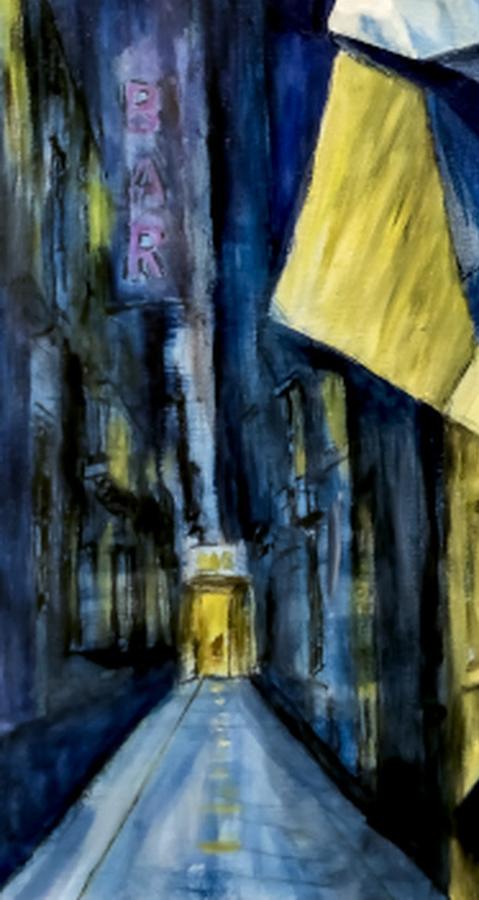
La calle y el barThe street and the bar
Una calle en perspectiva que se pierde en la noche, con el letrero vertical de un bar. Es la única salida del cuadro.
A street in perspective vanishing into the night, with the vertical sign of a bar. It is the only way out of the picture.
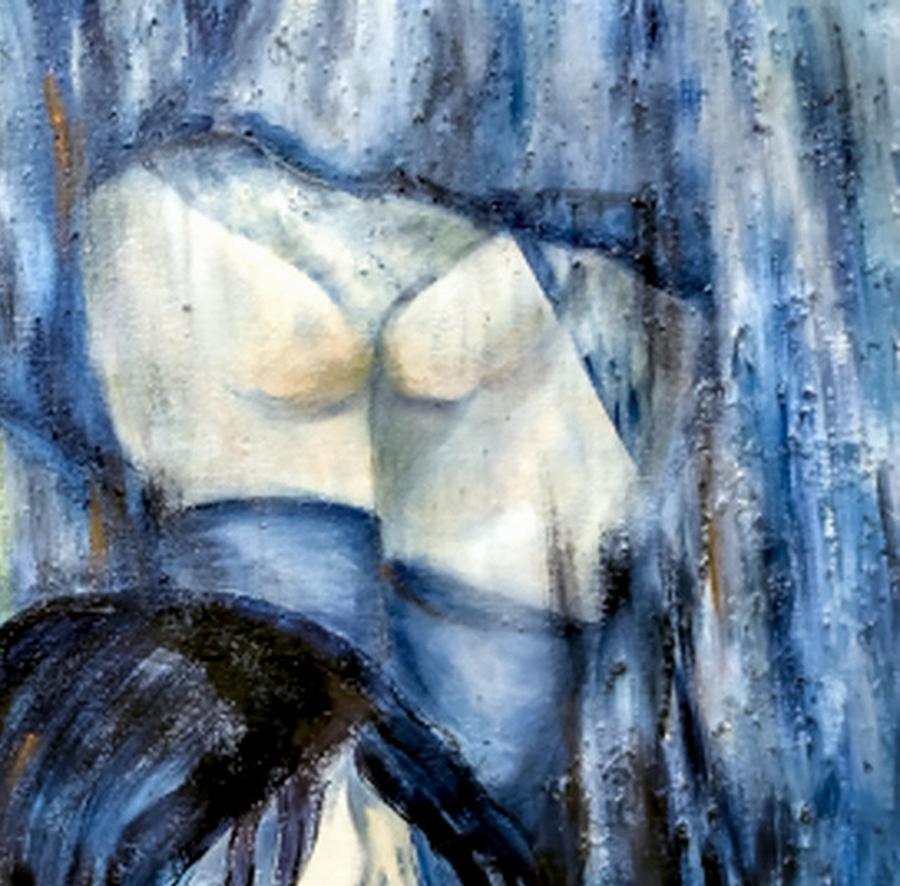
El desnudoThe nude
Arriba a la derecha, un cuerpo de espaldas pintado en blancos fríos, casi fundido con la lluvia azul del fondo.
At upper right, a body seen from behind painted in cool whites, almost dissolved into the blue rain of the background.
El proceso, en vídeoThe process, on video
Un recorrido breve por las fotos del taller, de la primera capa al cuadro terminado.
A short tour through the studio photographs, from the first layer to the finished painting.