BebopBebop
Del dibujo a lápiz al quinteto terminado: dos semanas de improvisación pintada.From pencil drawing to finished quintet: two weeks of painted improvisation.
Cómo se hizoHow it was made
El cuadro se pintó entre el 20 de octubre y el 4 de noviembre de 2026. Las fotos del taller muestran cómo nace del dibujo y crece a base de fragmentos: primero aparecen los músicos como líneas, luego los planos de color se van cerrando a su alrededor hasta que el fondo y las figuras forman una sola red.
The painting was made between 20 October and 4 November 2026. The studio photographs show it growing out of the drawing, fragment by fragment: the musicians first appear as lines, then planes of colour close in around them until background and figures form a single web.
-
El dibujoThe drawing
Sobre el lienzo de algodón, todavía sin tensar del todo, se dibuja a lápiz el quinteto entero: contrabajo, piano, batería, saxo y trompeta, cruzados por una red de diagonales. Aparecen ya los primeros toques de rojo y azul.
On the cotton canvas, not yet fully stretched, the whole quintet is drawn in pencil: double bass, piano, drums, saxophone and trumpet, crossed by a web of diagonals. The first touches of red and blue already appear.
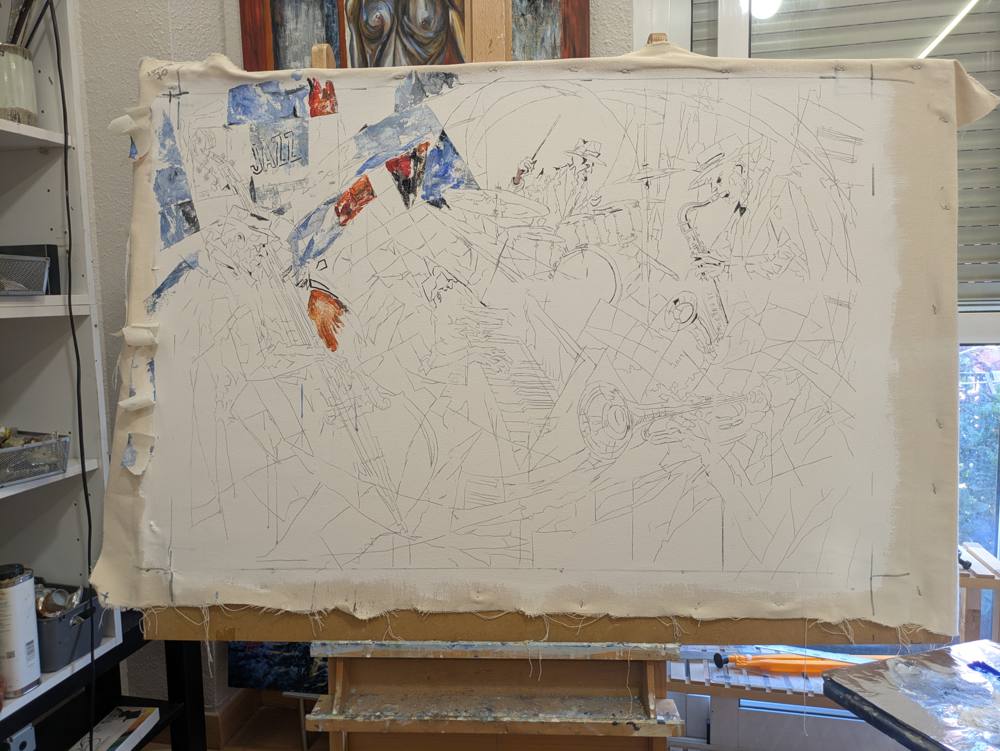
20-10-2026 -
Los primeros planosThe first planes
Los fragmentos azules y ocres empiezan a ocupar los bordes. El piano y la trompeta se definen con trazos negros; el centro sigue abierto, casi en blanco.
Blue and ochre fragments begin to fill the edges. Piano and trumpet are defined with black strokes; the centre is still open, almost blank.
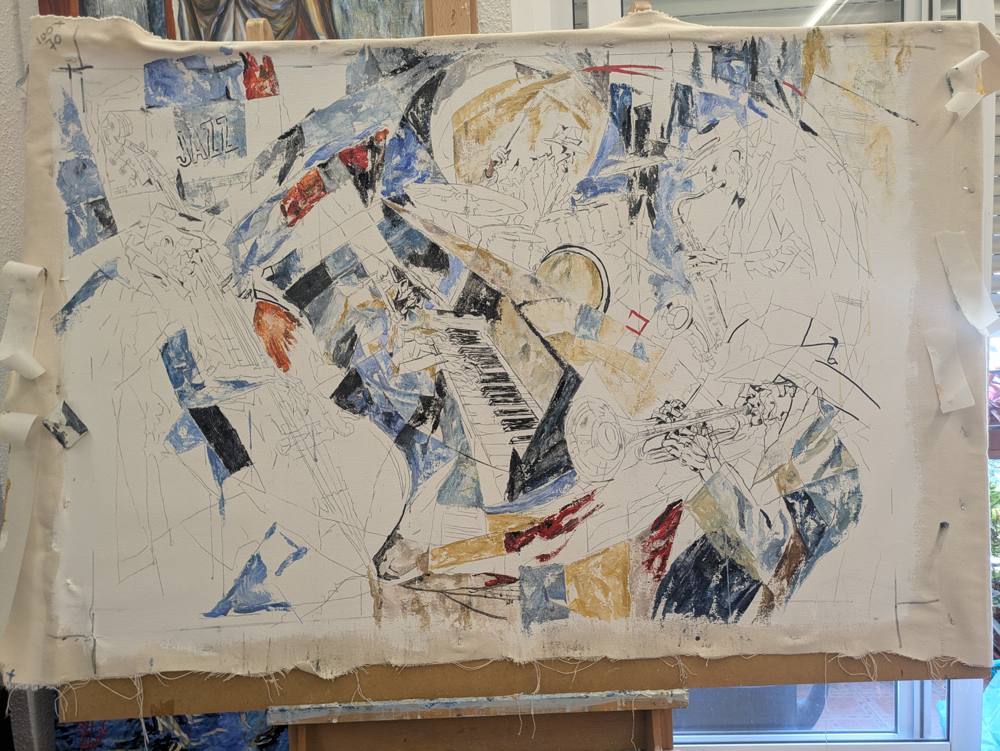
23-10-2026 -
Entra el contrabajoThe double bass arrives
El gran contrabajo naranja aparece a la izquierda y se convierte en el ancla de la composición. A partir de aquí todo el cuadro gira alrededor de su diagonal.
The large orange double bass appears on the left and becomes the anchor of the composition. From here on the whole picture turns around its diagonal.
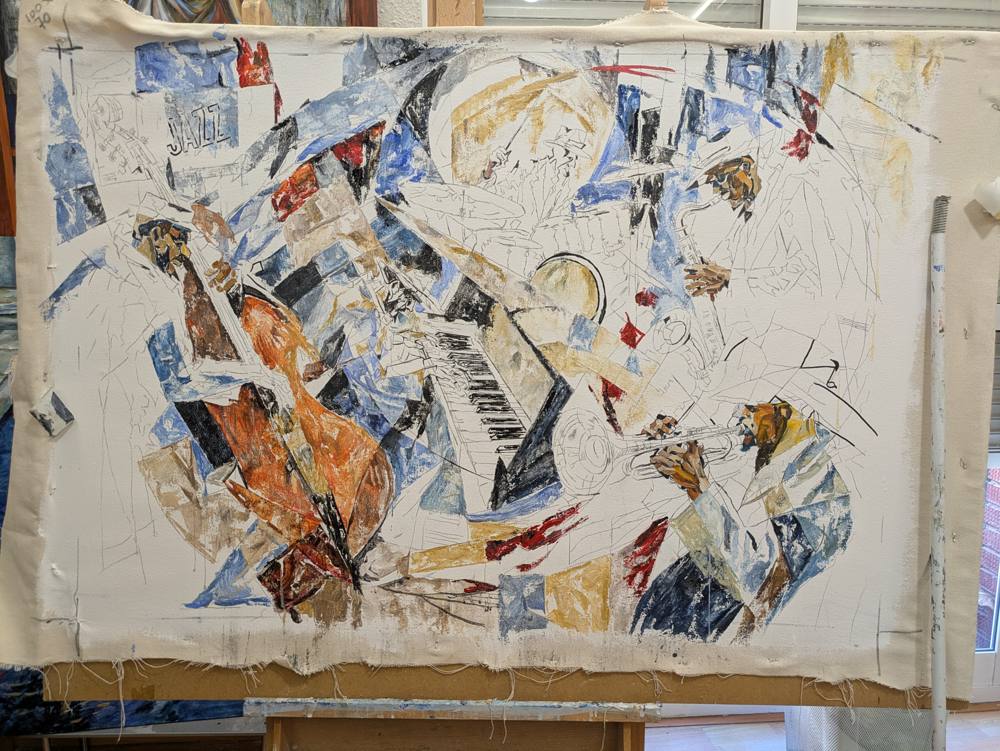
25-10-2026 -
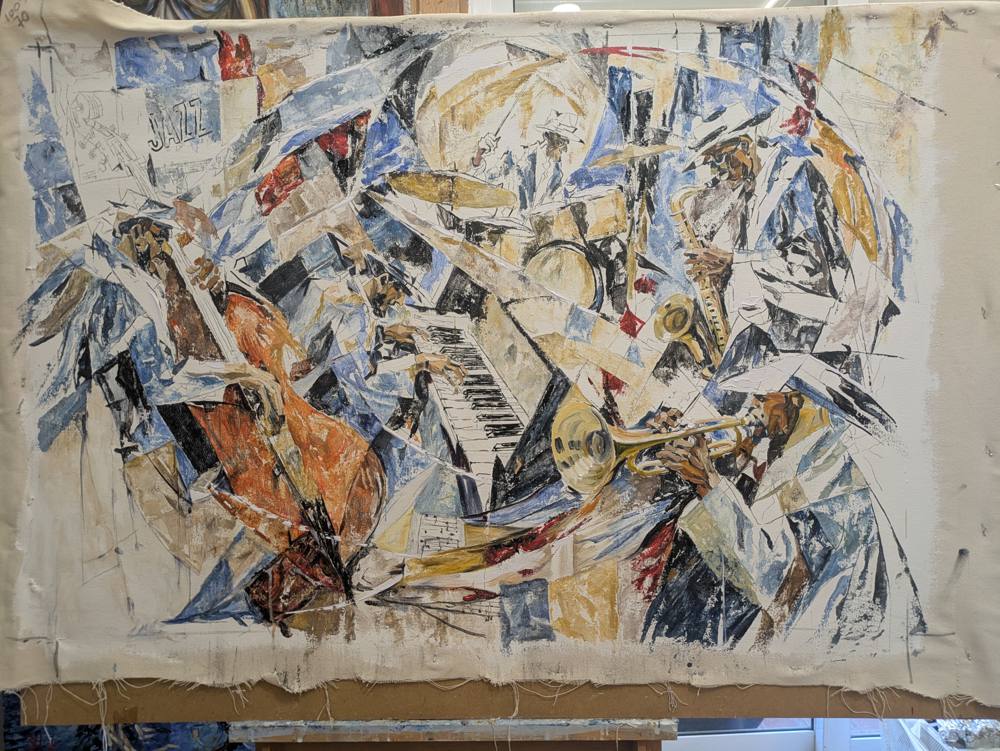
Se llena el escenarioThe stage fills up
La batería y el saxo toman cuerpo en la parte alta. Los blancos se vuelven grises fríos y la luz empieza a venir de los platillos dorados.
Drums and saxophone take shape at the top. The whites turn into cool greys and the light starts to come from the golden cymbals.
26-10-2026 -
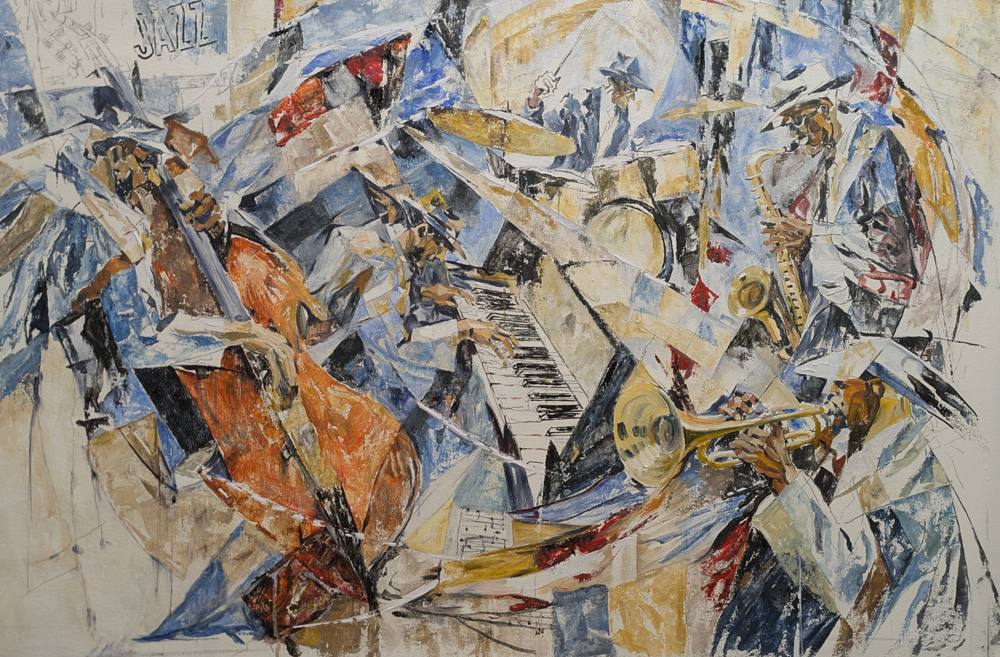
Contrastes y ritmoContrast and rhythm
Se refuerzan los negros y los rojos, que marcan el ritmo como acentos. La trompeta gana brillo y la partitura aparece a los pies del pianista.
Blacks and reds are strengthened, marking the rhythm like accents. The trumpet gains brilliance and the score appears at the pianist’s feet.
28-10-2026 -
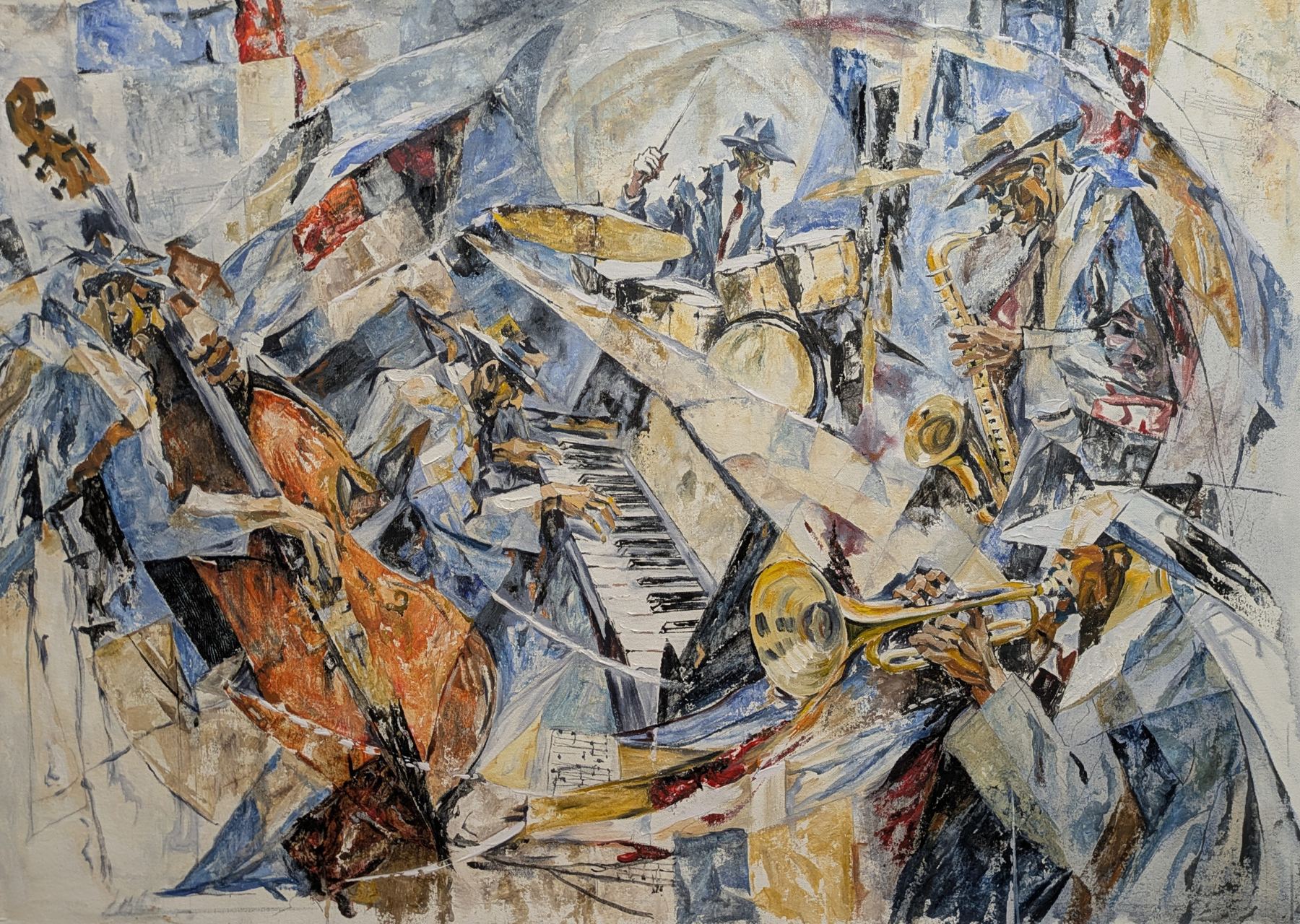
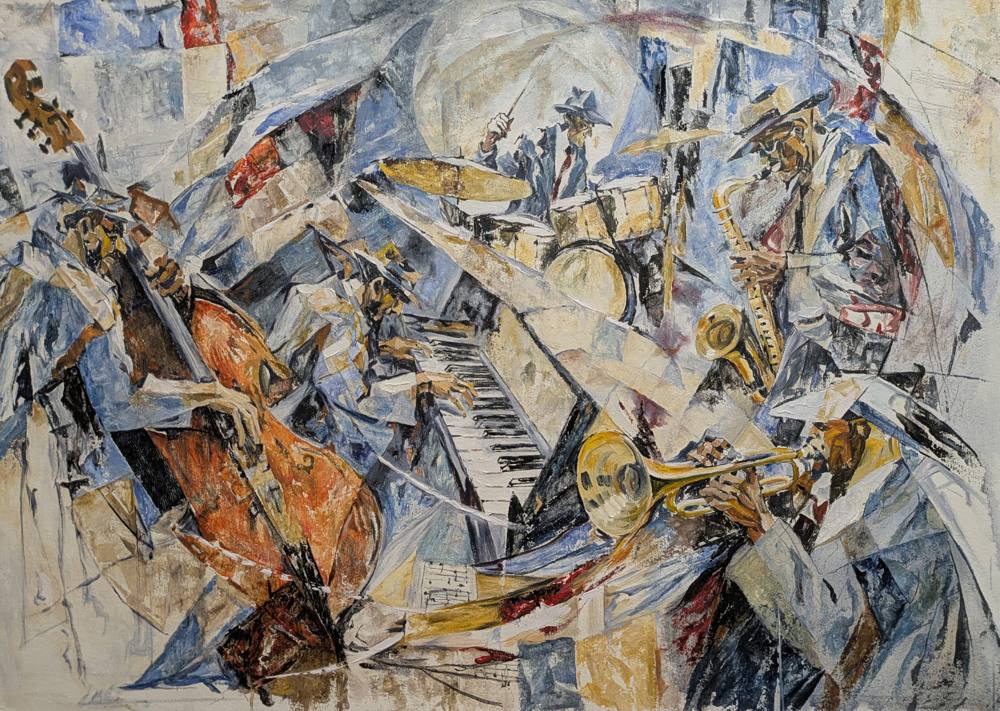
TerminadoFinished
El cuadro se da por acabado. Los cinco músicos quedan integrados en el mismo tejido de fragmentos, como si la música hubiera roto el espacio en pedazos.
The painting is declared finished. The five musicians are woven into the same fabric of fragments, as if the music had broken space into pieces.
04-11-2026
El bebop: pensar a toda velocidadBebop: thinking at full speed
El bebop nació en los clubes de Nueva York en los años cuarenta. Frente al swing de las grandes orquestas, era una música de grupos pequeños, rápida y compleja, donde cada músico improvisaba sobre los acordes y respondía a los demás en tiempo real.
El cuadro traduce esa forma de tocar a pintura. No hay un punto de vista único: cada instrumento ocupa su propio fragmento y, a la vez, se apoya en el de al lado. El espacio se rompe en planos como se rompe una melodía en frases cortas.
Bebop was born in New York clubs in the 1940s. Against the swing of the big bands, it was music for small groups, fast and complex, in which each musician improvised over the chords and answered the others in real time.
The painting translates that way of playing into paint. There is no single viewpoint: each instrument occupies its own fragment and at the same time leans on the next one. Space breaks into planes the way a melody breaks into short phrases.
- FragmentaciónFragmentation
La lección cubista sirve aquí para mostrar el tiempo de la música: varios instantes a la vez.
The cubist lesson is used here to show musical time: several instants at once.
- DiálogoDialogue
Contrabajo, piano, batería, saxo y trompeta se responden en diagonales que se cruzan.
Bass, piano, drums, sax and trumpet answer one another along crossing diagonals.
- ImprovisaciónImprovisation
La pincelada rápida y los blancos sin cubrir dejan ver la decisión del momento.
Quick brushwork and uncovered whites reveal the decision of the moment.
Cómo está pintadoHow it is painted
ComposiciónComposition
El contrabajo traza una gran diagonal desde abajo a la izquierda; los demás instrumentos se reparten en abanico a su alrededor. El centro, con el teclado del piano, es el punto de encuentro.
The double bass draws a great diagonal from the lower left; the other instruments fan out around it. The centre, with the piano keyboard, is the meeting point.
ColorColour
Azules fríos y grises contra ocres, naranjas y dorados. El naranja del contrabajo y el oro de la trompeta y los platillos son los focos de calor.
Cool blues and greys against ochres, oranges and golds. The orange of the bass and the gold of the trumpet and cymbals are the warm focal points.
MateriaMatter
Base de gesso, acrílico para los planos y óleo para los acentos. Zonas de lienzo casi desnudo conviven con empastes en los instrumentos.
Gesso ground, acrylic for the planes and oil for the accents. Areas of almost bare canvas live alongside impasto on the instruments.
Recorrido por los detallesA tour of the details
Pulsa un número para ir al detalle. Pulsa cualquier imagen para verla grande.Tap a number to jump to the detail. Tap any image to see it large.
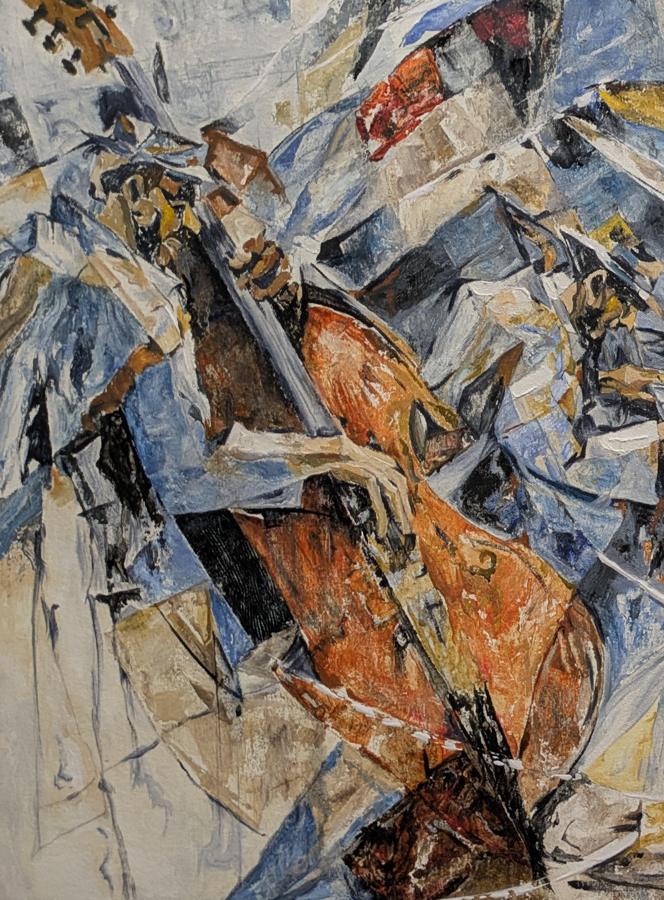
El contrabajoThe double bass
Naranja y siena, pintado con planos amplios. La mano del músico sobre las cuerdas es casi lo único figurativo: lo demás es ritmo.
Orange and sienna, painted in broad planes. The player’s hand on the strings is almost the only figurative element: the rest is rhythm.
El pianoThe piano
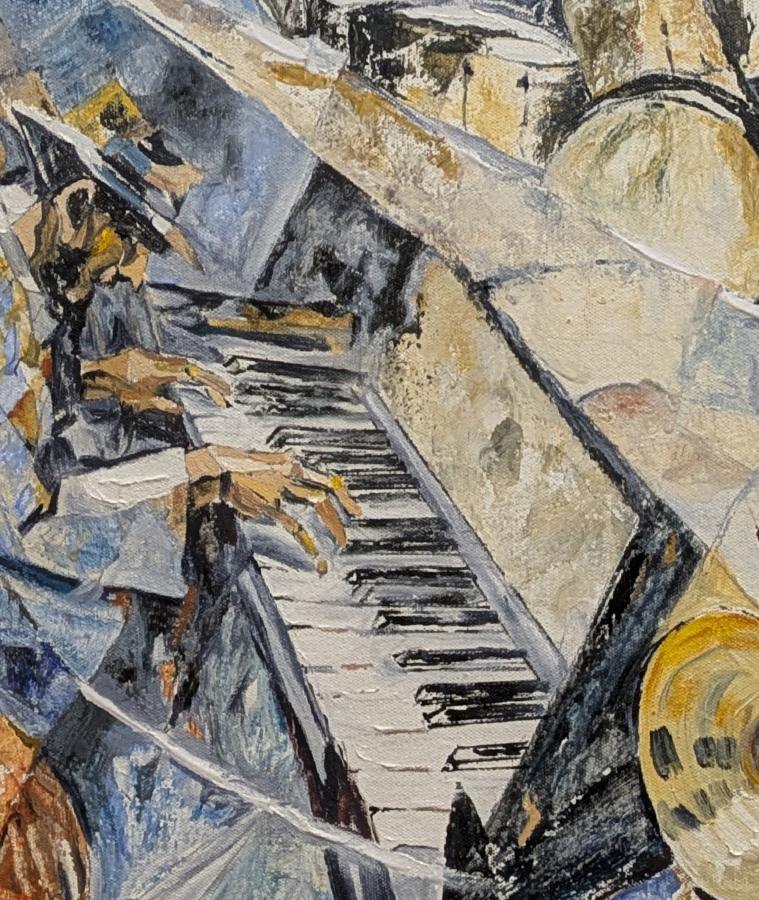
El teclado atraviesa el cuadro en diagonal y hace de eje. Las teclas blancas y negras repiten el contraste de todo el lienzo.
The keyboard crosses the picture diagonally and acts as an axis. Its black and white keys echo the contrast of the whole canvas.
La bateríaThe drums
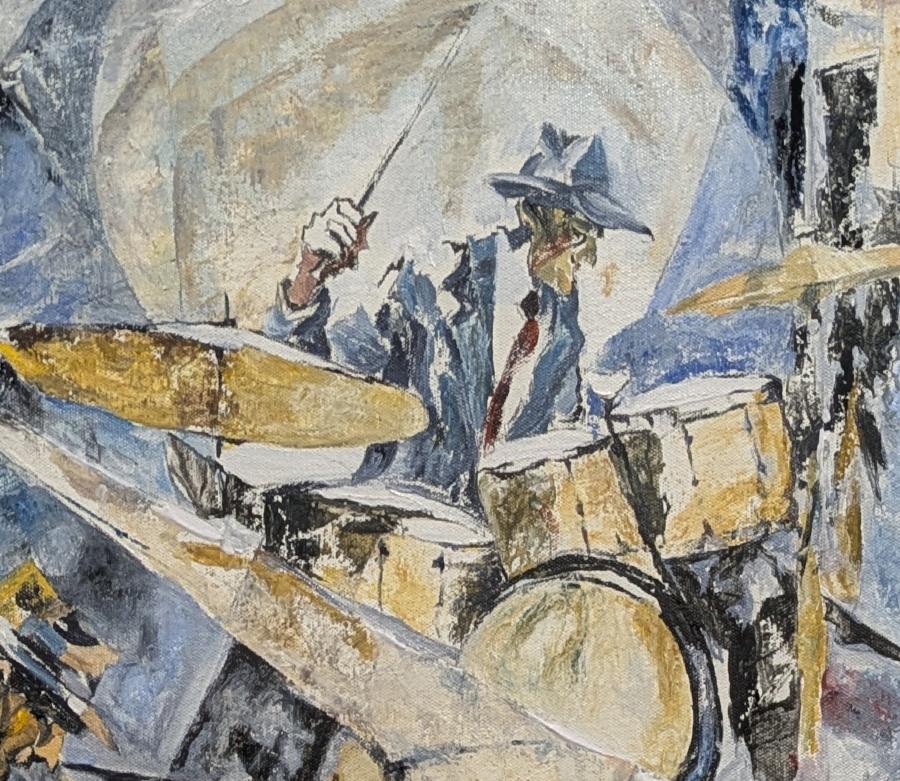
Los platillos dorados son las fuentes de luz del cuadro. El batería, al fondo, se reduce a unas pocas líneas.
The golden cymbals are the light sources of the painting. The drummer, at the back, is reduced to a few lines.
El saxoThe saxophone
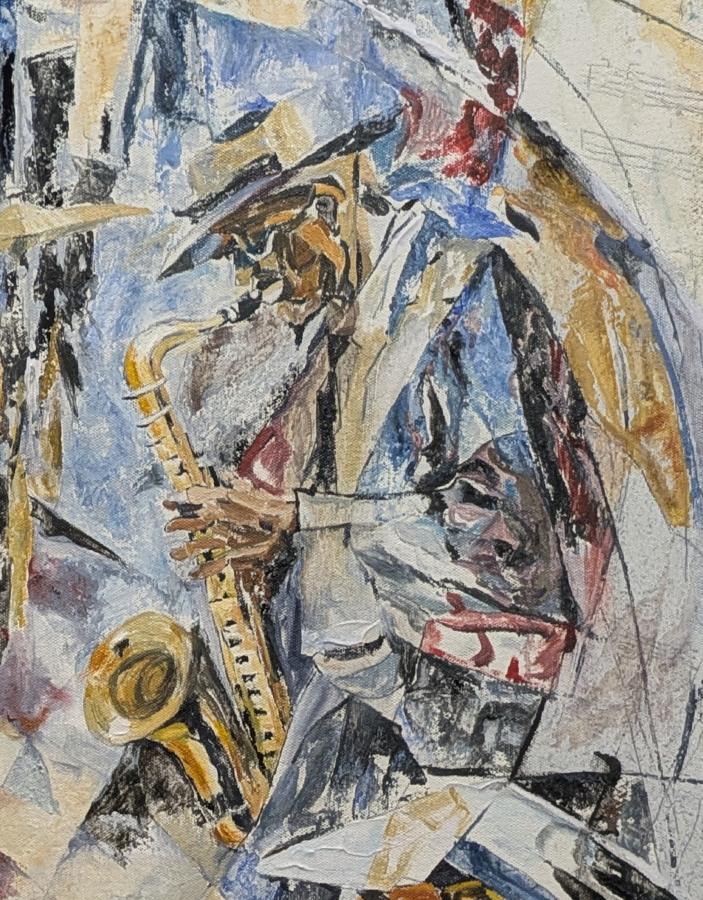
Dibujado con trazo nervioso en ocre y negro, el saxo se funde con los planos blancos que lo rodean.
Drawn with a nervous line in ochre and black, the saxophone merges with the white planes around it.
La trompetaThe trumpet
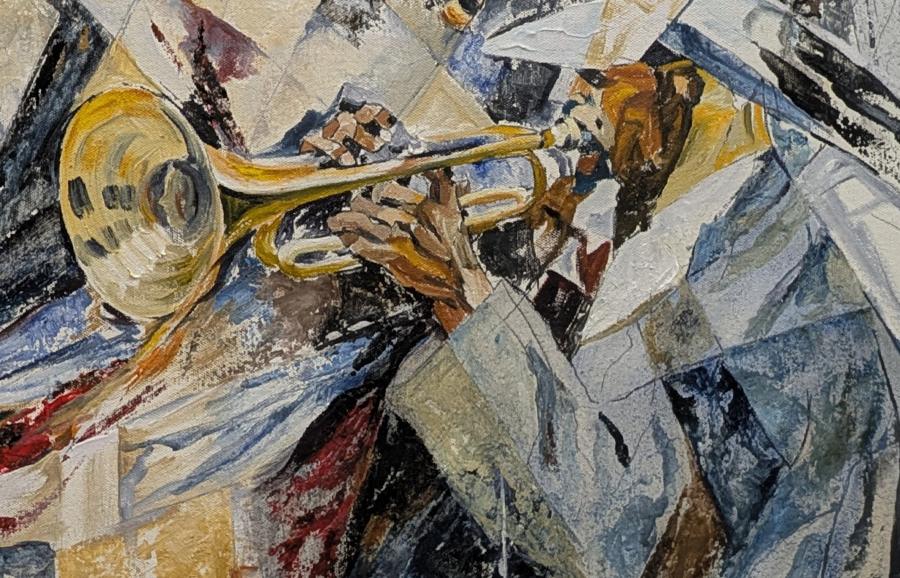
El metal brilla con amarillos y blancos densos. El trompetista, de perfil, empuja la composición hacia la derecha.
The brass shines in dense yellows and whites. The trumpeter, in profile, pushes the composition to the right.
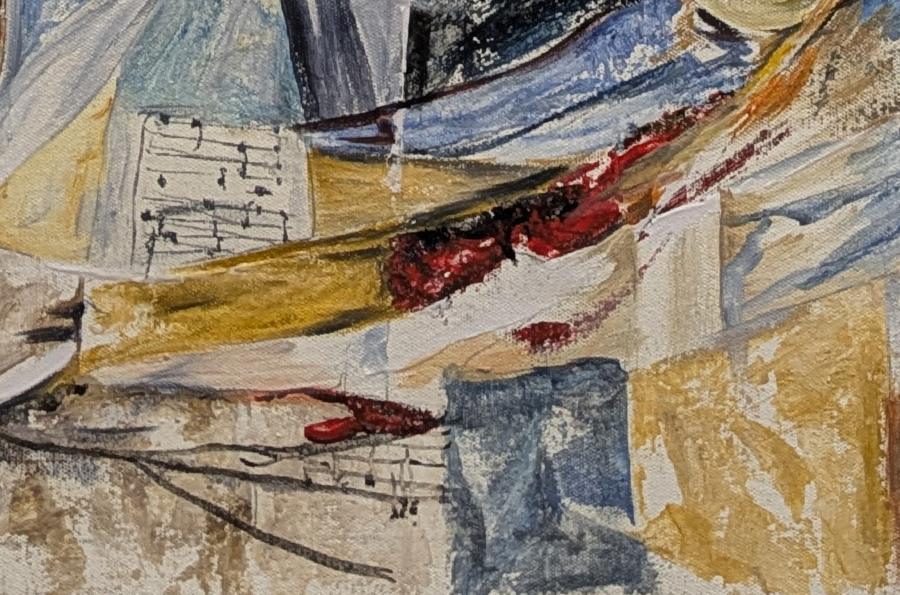
Partitura y materiaScore and matter
Abajo, un trozo de partitura y manchas de rojo y negro: el suelo del escenario convertido en pintura casi abstracta.
Below, a scrap of score and stains of red and black: the stage floor turned into almost abstract painting.
El proceso, en vídeoThe process, on video
Un recorrido breve por las fotos del taller, de la primera capa al cuadro terminado.
A short tour through the studio photographs, from the first layer to the finished painting.