Crossing the StreetCrossing the Street
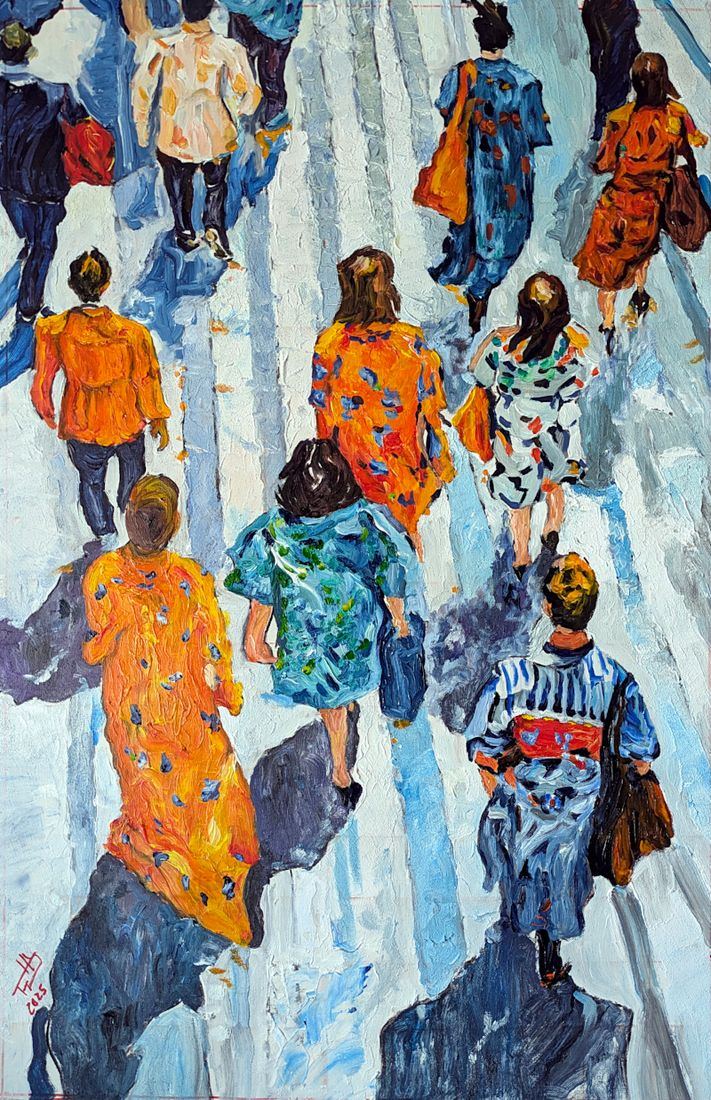
Peatones vistos desde arriba, sombras largas y una semana de óleo espeso.Pedestrians seen from above, long shadows and a week of thick oil paint.
Cómo se hizoHow it was made
El cuadro se pintó entre el 11 y el 17 de febrero de 2025. Las fotos del taller muestran cómo, sobre un dibujo cuadriculado, las figuras se llenan primero de color y luego el suelo y las sombras las van uniendo en un solo movimiento.
The painting was made between 11 and 17 February 2025. The studio photographs show how, over a gridded drawing, the figures are filled with colour first and then the ground and the shadows gradually join them into a single movement.
-
El dibujoThe drawing
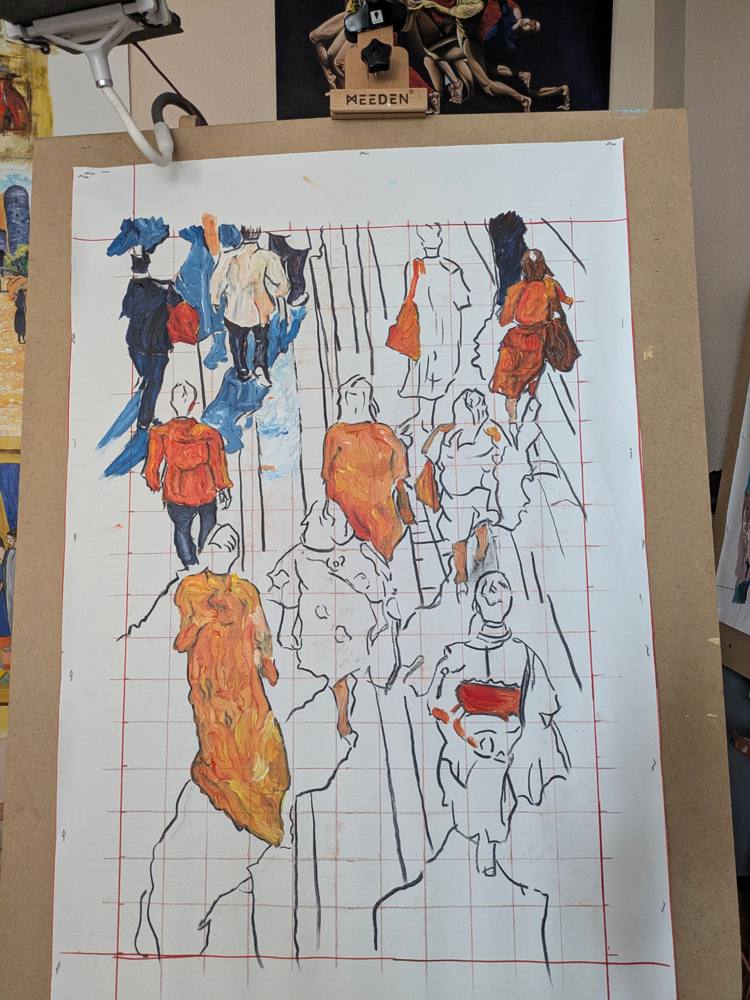
Las figuras se dibujan sobre una cuadrícula, vistas desde arriba. Ya hay color en algunas prendas: el naranja de un abrigo, el rojo de una bolsa.
The figures are drawn over a grid, seen from above. Some garments already have colour: the orange of a coat, the red of a bag.
11-02-2025 -
Las primeras figurasThe first figures
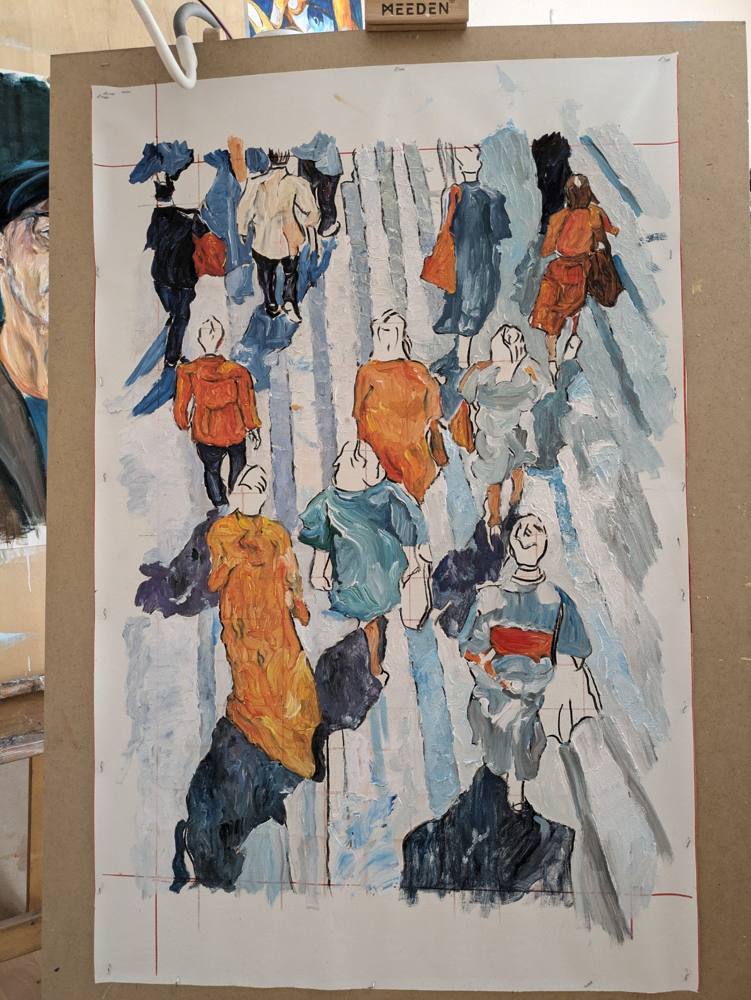
Se pintan los peatones de la parte alta y empiezan las sombras oscuras de la parte baja. El suelo sigue blanco.
The pedestrians at the top are painted and the dark shadows at the bottom begin. The ground is still white.
13-02-2025 -
El sueloThe ground
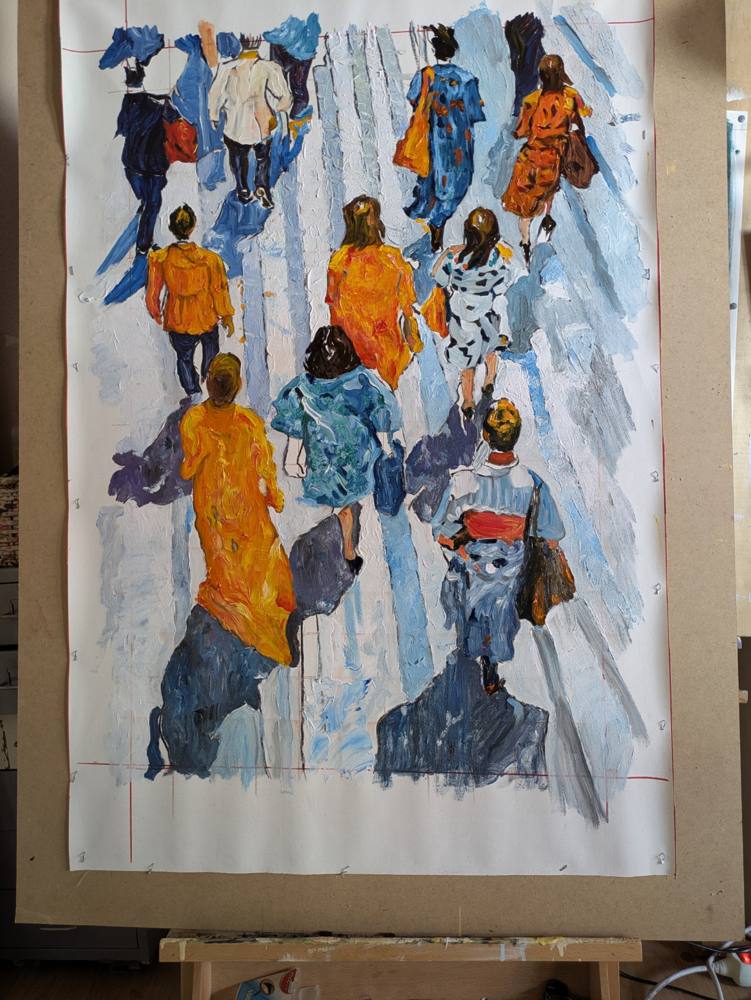
El asfalto se cubre de azules y grises con trazos diagonales. Aparecen los estampados de los vestidos.
The asphalt is covered with blues and greys in diagonal strokes. The patterns of the dresses appear.
15-02-2025 -
Estampados y luzPatterns and light
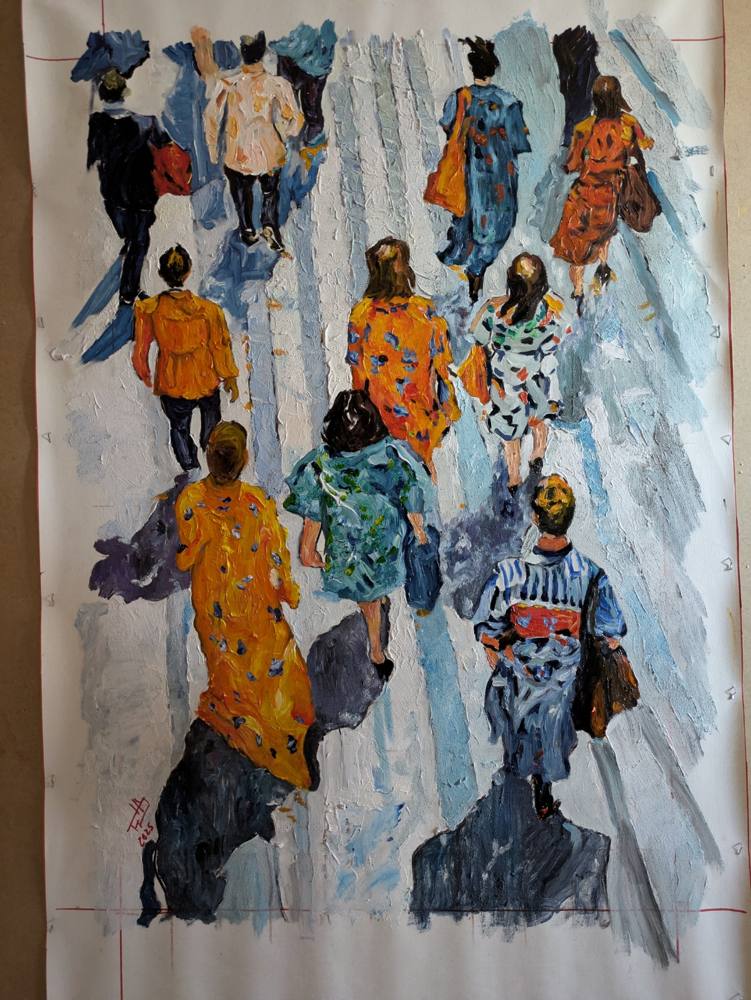
El kimono de rayas con faja roja y los vestidos de flores se completan. Las sombras ganan peso.
The striped kimono with its red sash and the flowered dresses are completed. The shadows gain weight.
16-02-2025 -
TerminadoFinished
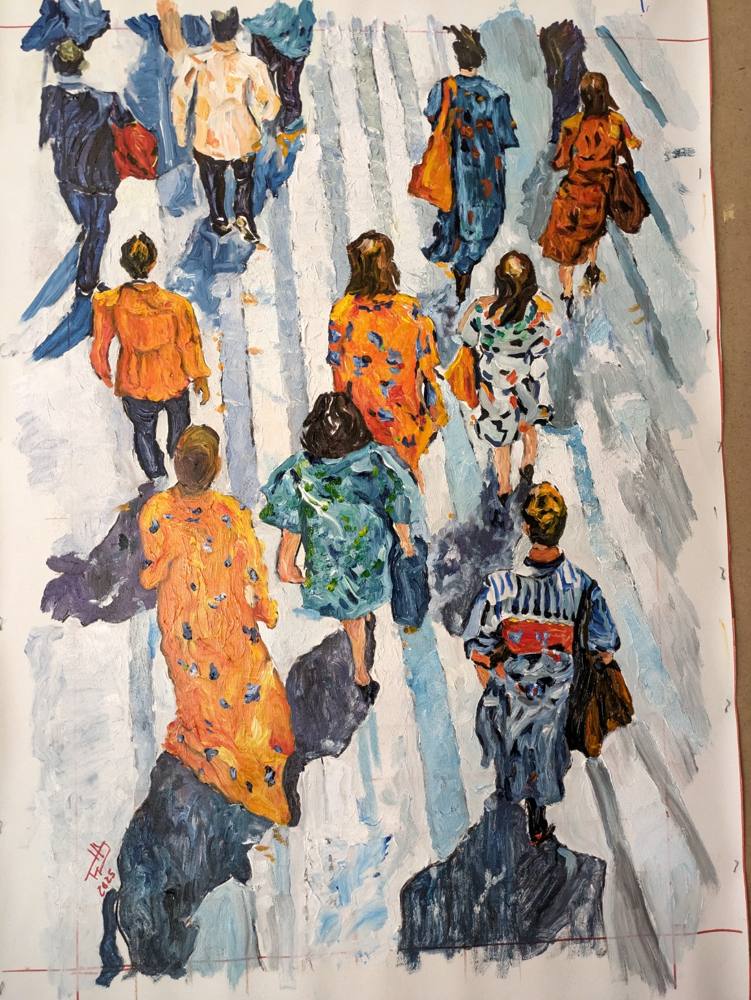
Se ajustan los blancos del paso de cebra y se firma. Todo el cuadro avanza en la misma dirección, como una corriente.
The whites of the zebra crossing are adjusted and the painting is signed. The whole picture moves in the same direction, like a current.
17-02-2025
La multitud vista desde arribaThe crowd seen from above
Visto desde arriba, un paso de peatones se convierte en un dibujo: cada persona es una mancha de color con su sombra, y todas juntas forman un río que cruza la calle.
El cuadro no cuenta quiénes son. Nadie mira al espectador; todos van de espaldas, hacia algún sitio. Lo que importa es el movimiento compartido, el ritmo de la ciudad, y cómo la luz del sol estira las sombras hasta hacerlas tan importantes como las figuras.
Seen from above, a pedestrian crossing becomes a drawing: each person is a patch of colour with its shadow, and together they form a river crossing the street.
The painting does not say who they are. No one looks at the viewer; they all walk away, towards somewhere. What matters is the shared movement, the rhythm of the city, and how the sunlight stretches the shadows until they are as important as the figures.
- Punto de vistaViewpoint
La mirada desde arriba aplana el espacio y convierte la calle en un tapiz.
The view from above flattens space and turns the street into a tapestry.
- SombrasShadows
Las sombras largas, en azules oscuros, pesan tanto como las personas que las proyectan.
The long shadows, in dark blues, weigh as much as the people who cast them.
- AnonimatoAnonymity
Nadie tiene cara: cada figura es un color, un estampado y una dirección.
No one has a face: each figure is a colour, a pattern and a direction.
Cómo está pintadoHow it is painted
ComposiciónComposition
Las figuras se reparten en diagonales que suben hacia arriba a la derecha. Las sombras, abajo, cierran el cuadro como una base oscura.
The figures are spread along diagonals rising towards the upper right. The shadows, below, close the picture like a dark base.
ColorColour
Naranjas intensos contra azules y grises fríos. El naranja aparece repetido en tres o cuatro figuras y guía la mirada por todo el lienzo.
Intense oranges against cool blues and greys. The orange repeats in three or four figures and guides the eye across the canvas.
MateriaMatter
Óleo muy empastado. Los estampados se pintan con toques cortos y gruesos sobre el color de fondo de cada prenda.
Heavily loaded oil paint. The patterns are painted in short, thick touches over the base colour of each garment.
Recorrido por los detallesA tour of the details
Pulsa un número para ir al detalle. Pulsa cualquier imagen para verla grande.Tap a number to jump to the detail. Tap any image to see it large.
Los de arribaThose at the top
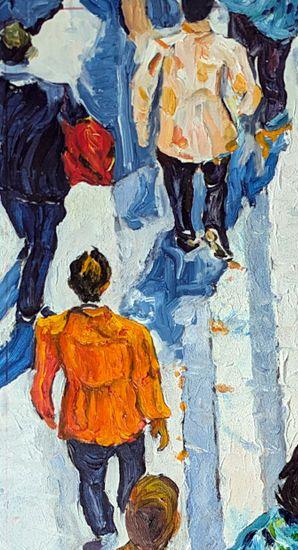
Las figuras más lejanas, pintadas con pocos trazos. La de naranja, de frente al sol, abre el recorrido.
The most distant figures, painted in a few strokes. The one in orange, facing the sun, opens the route.
Las dos mujeresThe two women
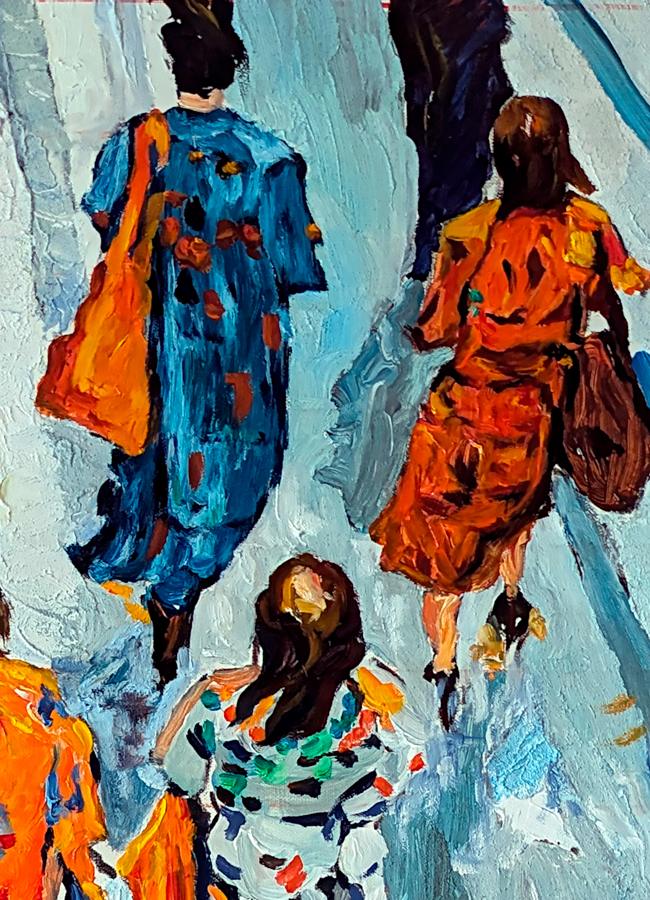
Un kimono azul con bolsa naranja y un vestido naranja estampado: los dos colores del cuadro, uno junto a otro.
A blue kimono with an orange bag and a patterned orange dress: the two colours of the painting, side by side.
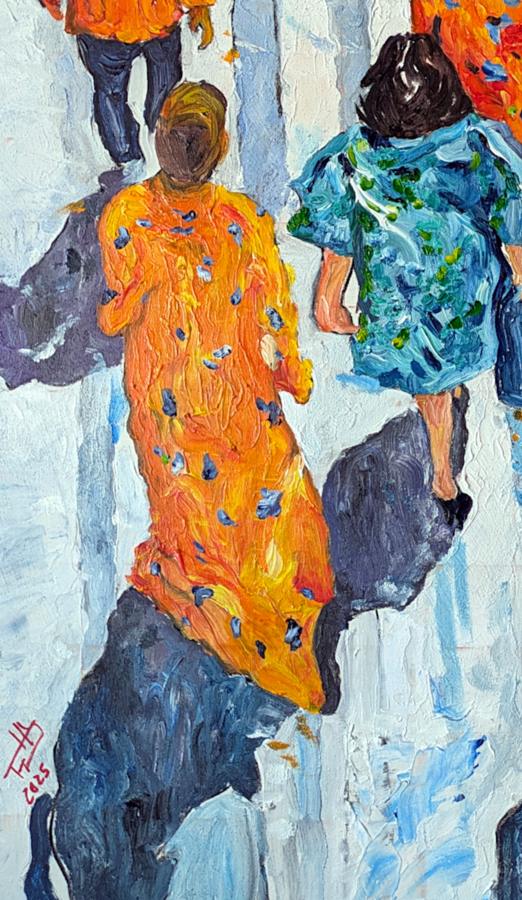
El abrigo naranjaThe orange coat
La figura más grande y cálida, con su sombra violeta. El estampado azul sobre el naranja se pinta con toques sueltos.
The largest and warmest figure, with its violet shadow. The blue pattern on the orange is painted in loose touches.
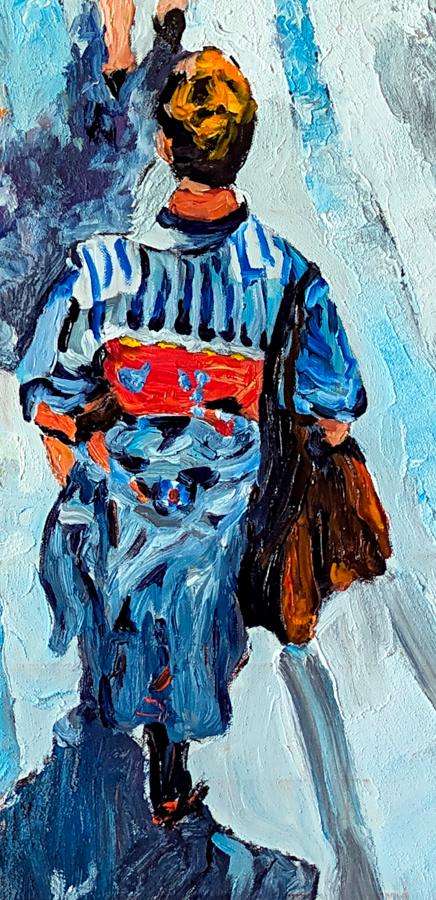
El kimono de rayasThe striped kimono
Rayas azules y blancas, una faja roja y una bolsa marrón. Es el único estampado geométrico del cuadro.
Blue and white stripes, a red sash and a brown bag. It is the only geometric pattern in the picture.
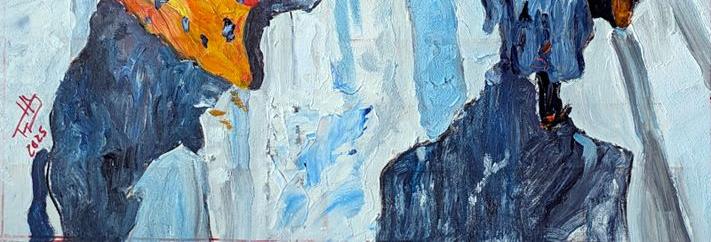
Las sombrasThe shadows
Masas de azul oscuro que se alargan hacia abajo. Sin ellas las figuras flotarían; con ellas, pisan el suelo.
Masses of dark blue stretching downwards. Without them the figures would float; with them, they stand on the ground.