La lucha de HeráclitoThe Struggle of Heraclitus
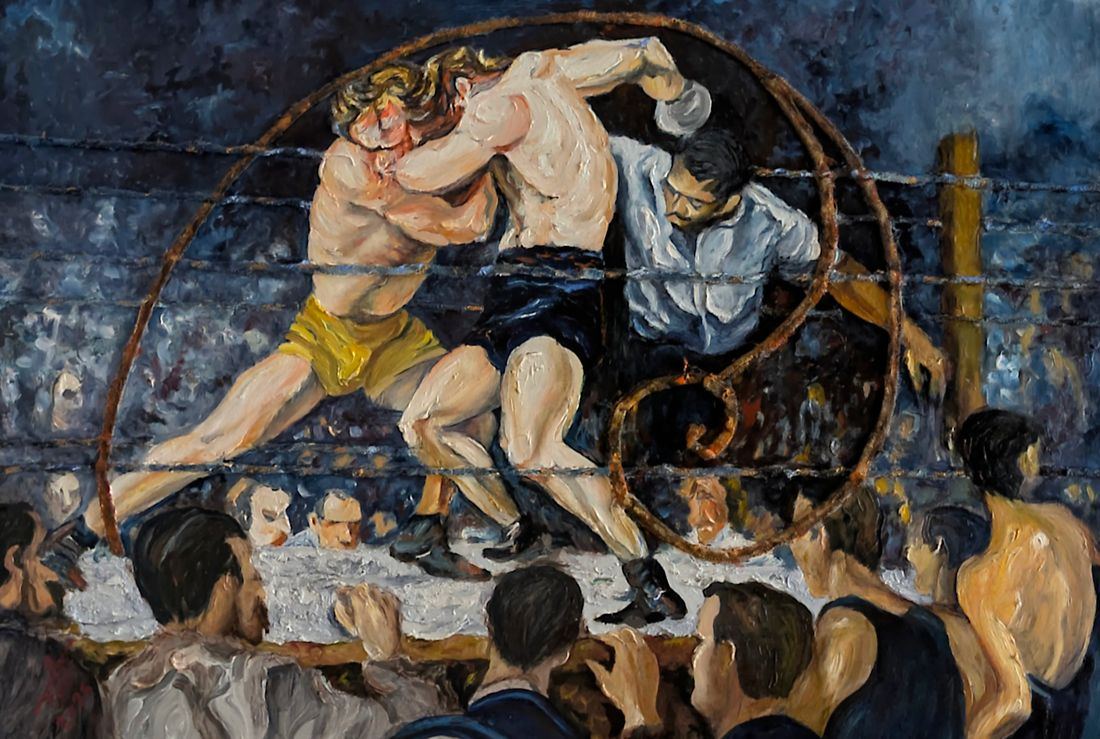
Dos boxeadores abrazados en el ring y una espiral que lo envuelve todo: el conflicto como motor.Two boxers locked together in the ring and a spiral that wraps around everything: conflict as the driving force.
Cómo se hizoHow it was made
El cuadro se pintó entre el 25 de septiembre y el 9 de octubre de 2025. Las fotos del taller muestran un proceso clásico: primero una grisalla en blancos y negros que fija todas las figuras, y después el color que entra poco a poco, de los luchadores hacia el público.
The painting was made between 25 September and 9 October 2025. The studio photographs show a classical process: first a grisaille in blacks and whites that fixes all the figures, and then colour coming in little by little, from the fighters out to the crowd.
-
La grisallaThe grisaille
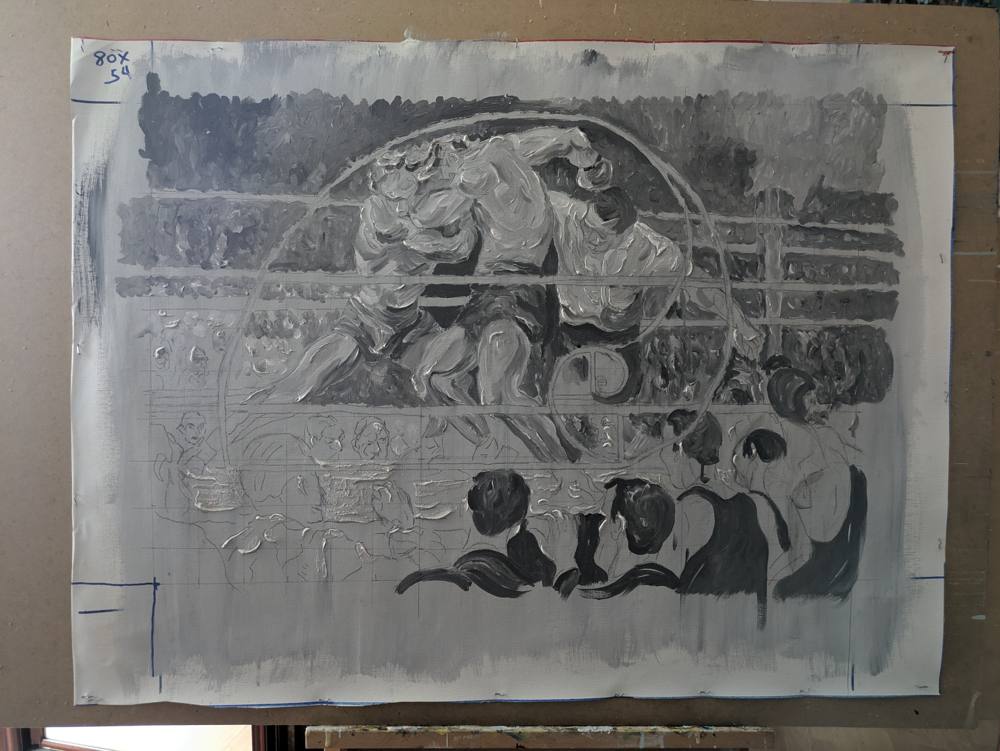
Todo el cuadro se pinta en grises: los luchadores, las cuerdas y el público. La espiral ya está dibujada.
The whole picture is painted in greys: the fighters, the ropes and the crowd. The spiral is already drawn.
25-09-2025 -
VolúmenesVolumes
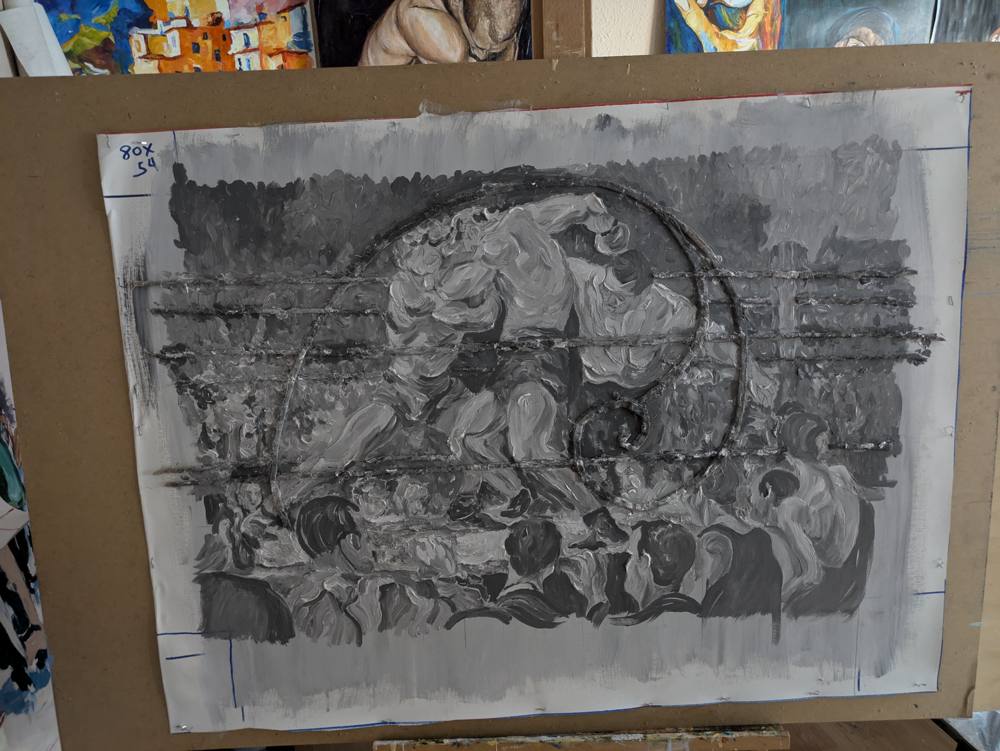
Se refuerzan las sombras de la grisalla y los cuerpos ganan volumen sin color todavía.
The shadows of the grisaille are strengthened and the bodies gain volume, still without colour.
27-09-2025 -
La carneThe flesh
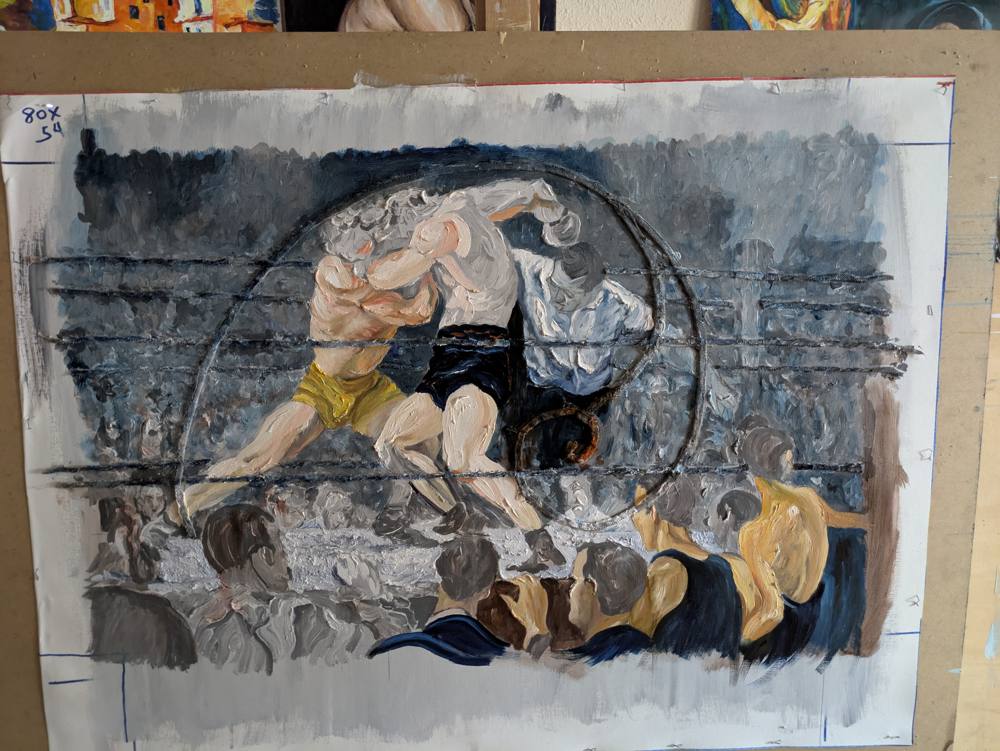
Entra el color en los luchadores: tonos de carne y el calzón amarillo. La primera fila del público también se calienta.
Colour comes into the fighters: flesh tones and the yellow trunks. The first row of the crowd also warms up.
29-09-2025 -
El fondoThe background
El fondo se cubre de azul noche y la espiral se pinta en óxido sobre él.
The background is covered in night blue and the spiral is painted in rust over it.
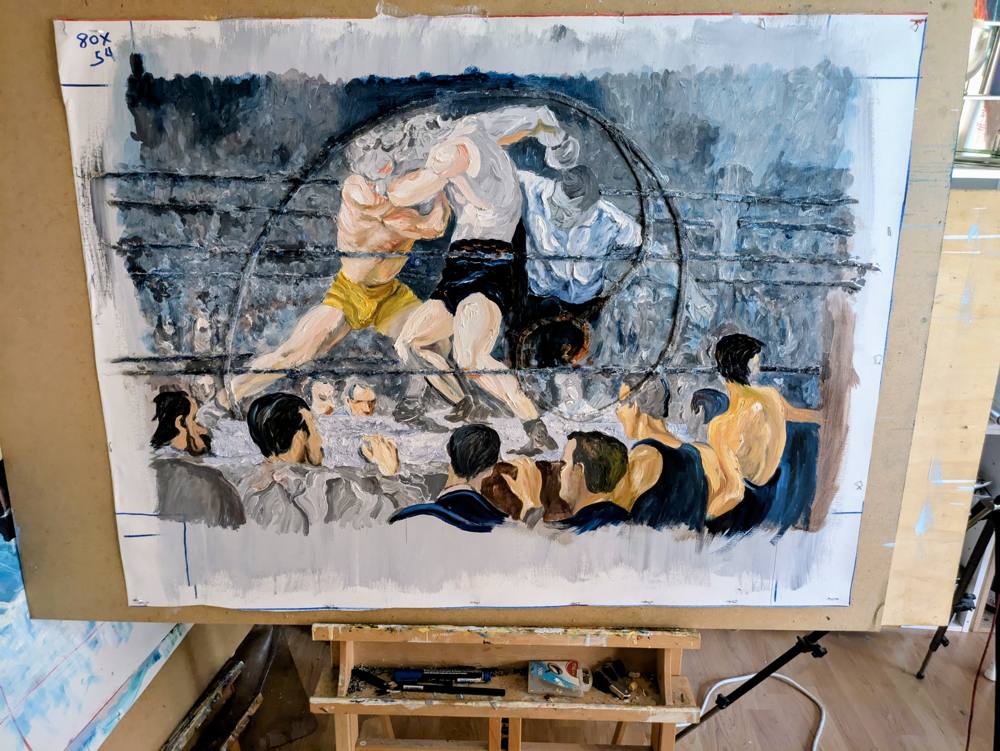
30-09-2025 -
El públicoThe crowd
Se pintan las cabezas del público, de espaldas, y el poste del ring. Las cuerdas cruzan la escena.
The heads of the crowd, seen from behind, are painted, along with the ring post. The ropes cross the scene.
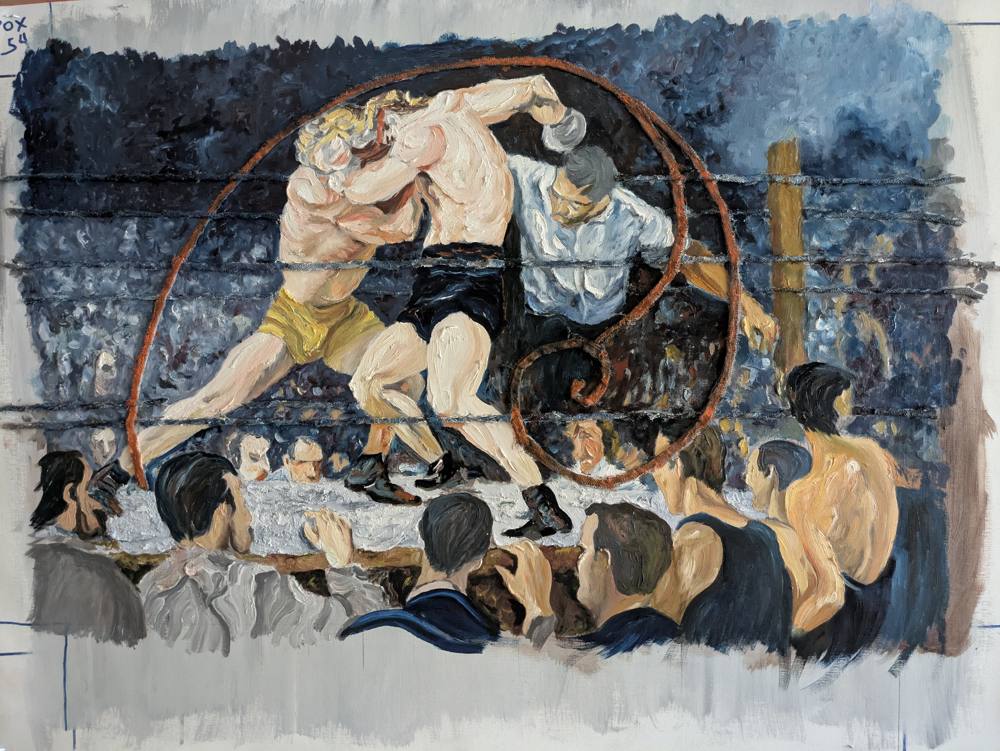
02-10-2025 -
LucesHighlights
Se ajustan los brillos de la piel y los blancos de las camisas. La espiral se integra con las cuerdas.
The highlights of the skin and the whites of the shirts are adjusted. The spiral merges with the ropes.
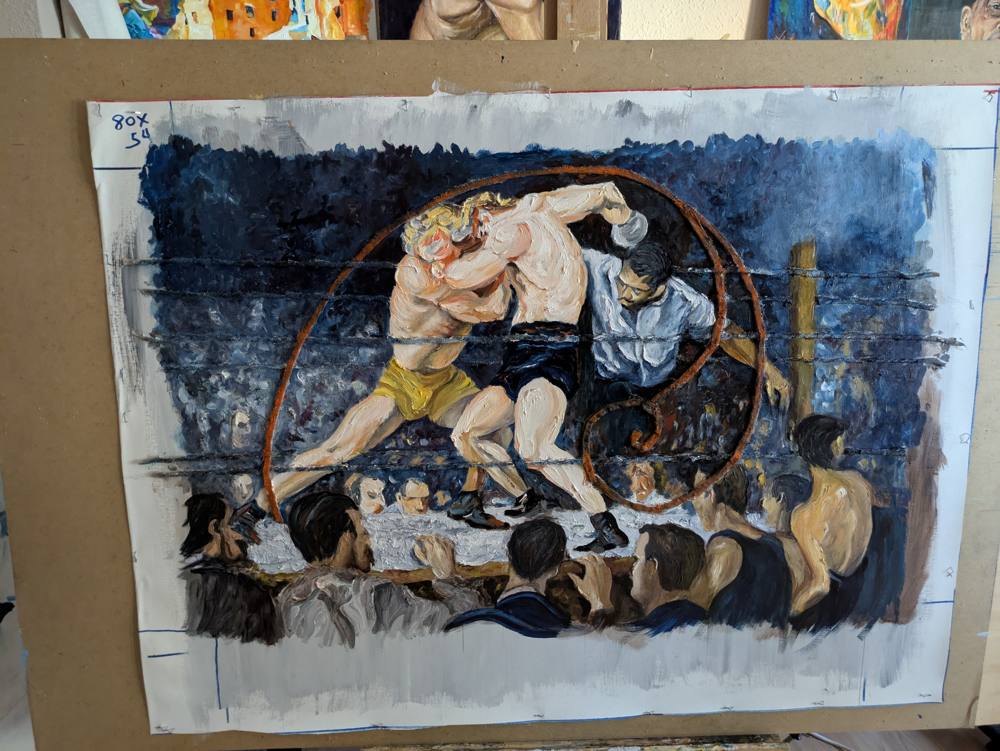
05-10-2025 -
TerminadoFinished
Últimos toques y firma. El combate queda suspendido en el instante del choque.
Final touches and signature. The fight is left suspended at the moment of impact.
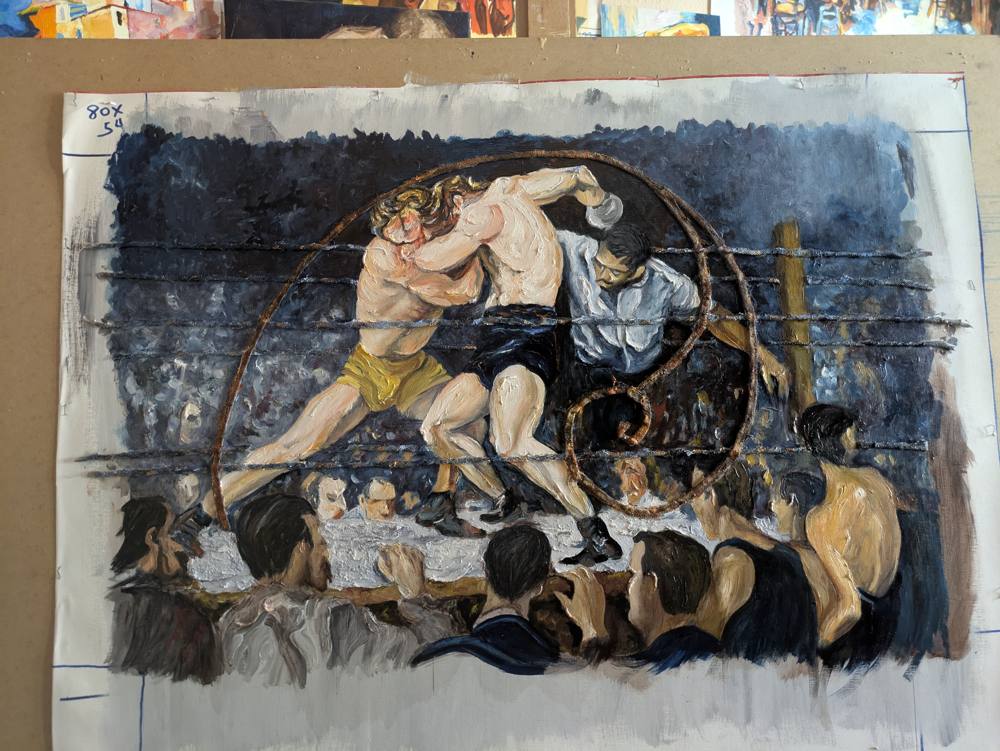
09-10-2025
La guerra es padre de todas las cosasWar is the father of all things
Heráclito de Éfeso pensaba que todo cambia y que el conflicto entre contrarios es lo que mantiene vivo el mundo. Su frase más famosa lo dice así: la guerra es padre de todas las cosas.
El cuadro convierte el ring en un escenario filosófico. Los dos boxeadores ya no se distinguen: están abrazados, cada uno sosteniendo al otro mientras lo golpea. El árbitro intenta separarlos y el público se funde con la oscuridad. Una gran espiral, como la de la proporción áurea, lo envuelve todo: el movimiento continuo en el que los opuestos se necesitan.
Heraclitus of Ephesus believed that everything changes and that conflict between opposites is what keeps the world alive. His most famous saying puts it this way: war is the father of all things.
The painting turns the ring into a philosophical stage. The two boxers can no longer be told apart: they are locked together, each holding the other up while striking him. The referee tries to separate them and the crowd melts into the darkness. A great spiral, like that of the golden ratio, wraps around everything: the continuous movement in which opposites need each other.
- ContrariosOpposites
Los dos luchadores son a la vez rivales y apoyo: sin uno, el otro cae.
The two fighters are both rivals and support: without one, the other falls.
- DevenirBecoming
La espiral sugiere un movimiento que no termina, como el río de Heráclito.
The spiral suggests a movement that never ends, like Heraclitus’s river.
- EspectáculoSpectacle
El público mira de espaldas: también nosotros somos espectadores del conflicto.
The crowd watches from behind: we too are spectators of the conflict.
Cómo está pintadoHow it is painted
ComposiciónComposition
Los luchadores forman una masa central en diagonal, dentro de la espiral. Las cuerdas cortan el cuadro en horizontal y el público cierra la parte baja.
The fighters form a central diagonal mass within the spiral. The ropes cut the picture horizontally and the crowd closes the lower part.
ColorColour
Azul noche, grises y negros para el fondo; carnes cálidas, el amarillo del calzón y el óxido de la espiral para el centro.
Night blue, greys and blacks for the background; warm flesh, the yellow of the trunks and the rust of the spiral for the centre.
MateriaMatter
Óleo sobre una grisalla previa. La pincelada es gruesa en los cuerpos y más suelta y oscura en el público.
Oil over a preliminary grisaille. The brushwork is thick on the bodies and looser and darker in the crowd.
Recorrido por los detallesA tour of the details
Pulsa un número para ir al detalle. Pulsa cualquier imagen para verla grande.Tap a number to jump to the detail. Tap any image to see it large.
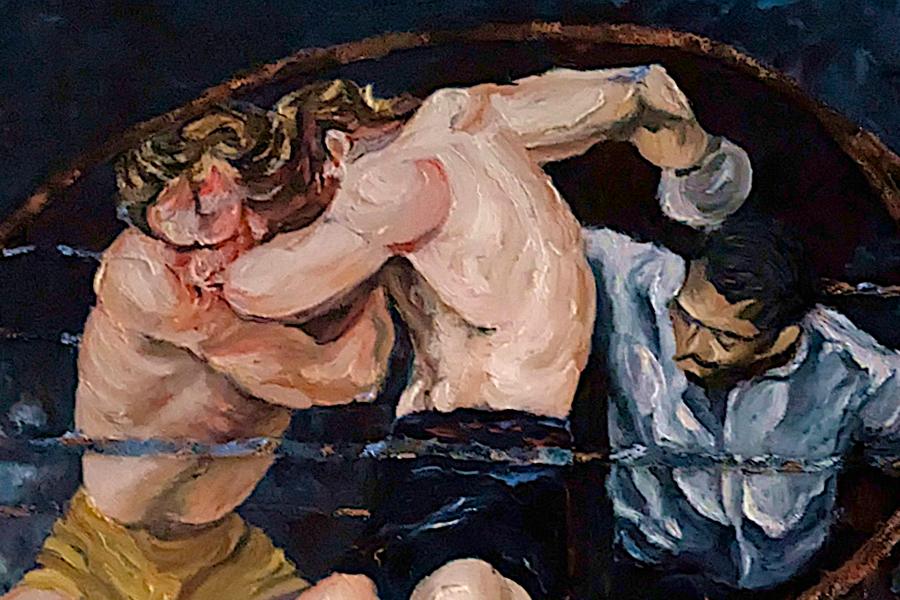
El abrazoThe clinch
Las cabezas de los dos boxeadores casi se funden. El golpe y el abrazo son el mismo gesto.
The heads of the two boxers almost merge. The blow and the embrace are the same gesture.
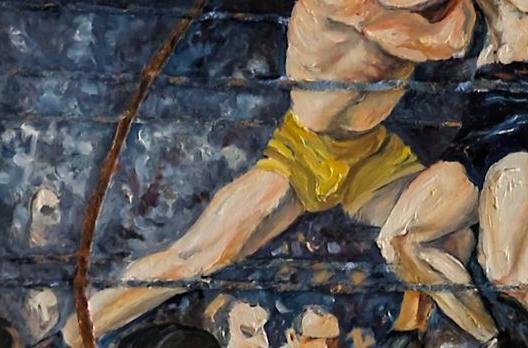
El calzón amarilloThe yellow trunks
Una pierna estirada y el amarillo del calzón: el punto más luminoso del cuadro.
A stretched leg and the yellow of the trunks: the brightest spot in the painting.
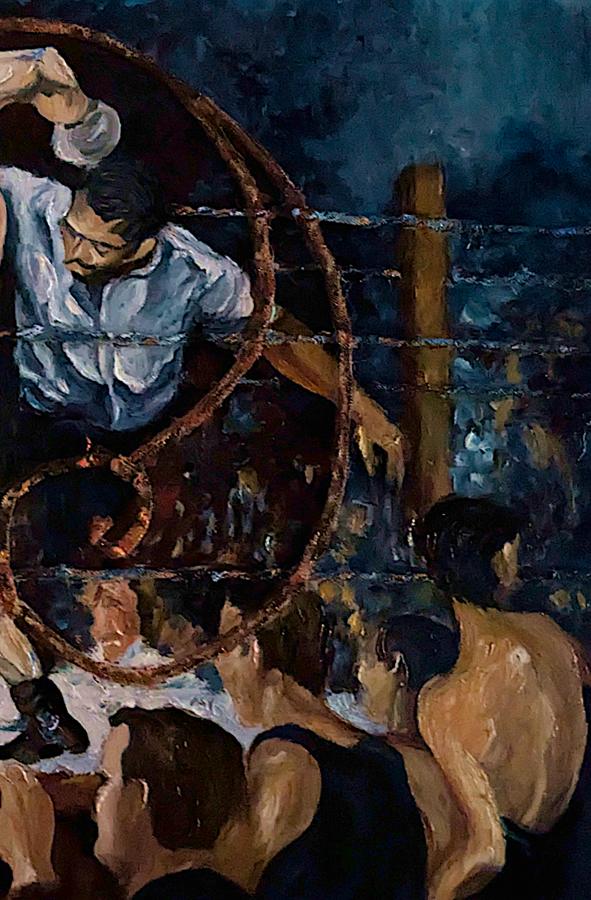
La espiral y el públicoThe spiral and the crowd
A la derecha, la espiral de óxido baja entre el poste y los espectadores con el torso desnudo.
On the right, the rust spiral comes down between the post and the bare-chested spectators.
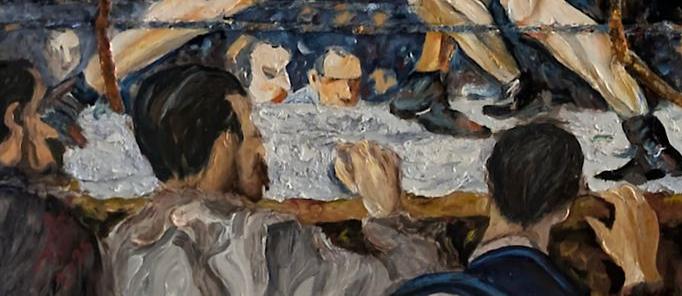
El públicoThe crowd
Cabezas de espaldas pintadas con pocos trazos. La multitud es una masa que se disuelve en la sombra.
Heads seen from behind, painted in a few strokes. The crowd is a mass dissolving into shadow.